Electroless Nickel Plating in Singapore: The Complete Engineer's Guide
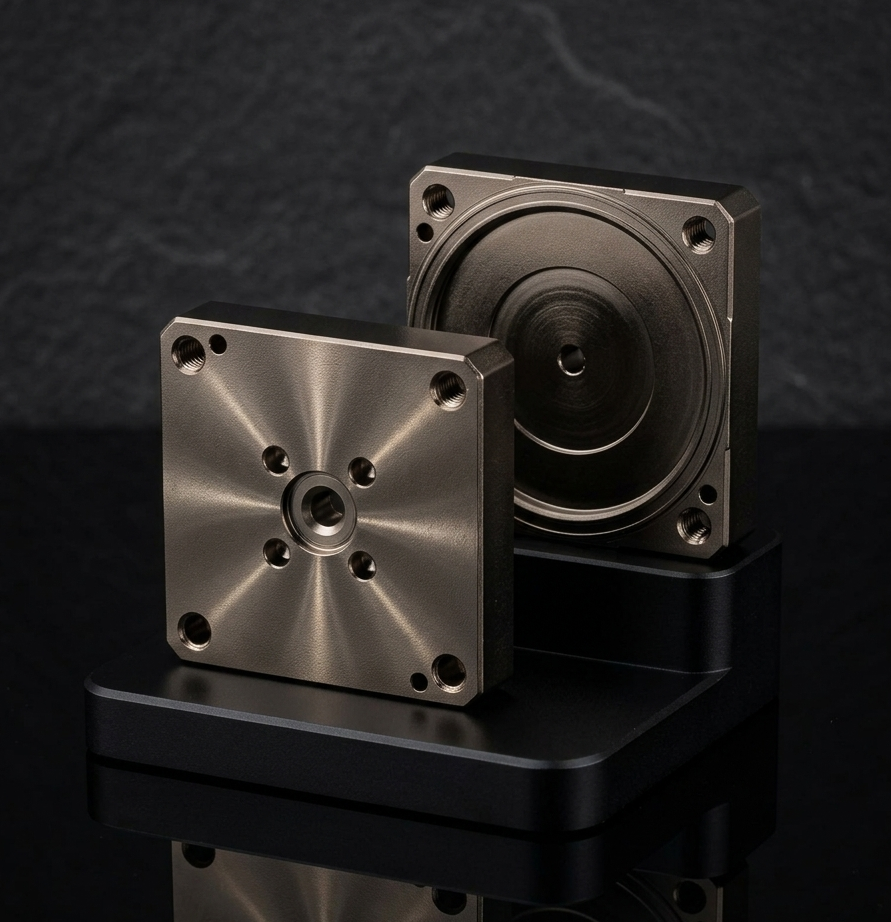
A practical engineer's guide to electroless nickel plating in Singapore: how nickel-phosphorus deposition works, choosing low, medium or high phosphorus grades, heat treatment for hardness, and where EN beats electrolytic nickel and hard chrome.
Electroless nickel plating is one of the most versatile functional coatings available to design and manufacturing engineers, yet it is also one of the most misunderstood. Unlike conventional electroplating, it does not rely on an electric current to drive metal onto the part. Instead, it uses a controlled chemical reaction to deposit a nickel-phosphorus alloy that follows the contours of a component with remarkable precision. For parts with deep bores, blind holes, internal threads or intricate geometry, this uniformity is transformative. This guide explains how the process works, how to choose between low, medium and high phosphorus grades, how heat treatment unlocks hardness, and how electroless nickel compares with electrolytic nickel and hard chrome so you can specify it with confidence for your projects in Singapore and the region.
What Electroless Nickel Plating Actually Is
Electroless nickel, commonly abbreviated to EN, is an autocatalytic coating. The term autocatalytic means the deposited metal itself catalyses the continued reduction of nickel from the plating solution, so the coating keeps growing on its own surface once it has started. The bath contains nickel ions and a chemical reducing agent, most often sodium hypophosphite. As the hypophosphite oxidises at the catalytic surface, it releases electrons that reduce nickel ions to metallic nickel, and at the same time a proportion of phosphorus co-deposits into the coating. The result is not pure nickel but a nickel-phosphorus alloy whose properties are governed largely by its phosphorus content.
This chemistry is the key to everything that makes EN useful. Because there is no external current and no anodes, there is no current density to manage and therefore no preferential build-up on edges and high points. Every surface that the solution can reach is plated at essentially the same rate. That single characteristic is why engineers reach for electroless nickel when geometry would defeat a conventional plating line. You can learn more about our wider plating capabilities on our nickel plating and dedicated electroless nickel service pages.
How the Process Works Step by Step
A reliable electroless nickel result depends far more on preparation than on the plating step itself. The deposit is only as good as the surface it bonds to, so a disciplined process sequence is essential.
Cleaning and Surface Preparation
Parts first pass through cleaning stages that remove oils, fingerprints, machining residues and oxides. Soak cleaning, electrocleaning where appropriate, and acid activation bring the substrate to a chemically clean, active state. Any contamination left on the surface becomes a site for poor adhesion or skip plating, so this stage is where quality is won or lost.
Activation and Strike
Depending on the base metal, an activation or strike step may be needed so that the autocatalytic reaction initiates evenly. Steels, stainless steels, aluminium and copper alloys each require their own pre-treatment route. Aluminium, for example, is typically given a zincate treatment so that nickel can deposit reliably onto an otherwise passive surface.
Deposition in the Bath
The activated parts are immersed in the heated electroless nickel bath, generally operating around 85 to 92 degrees Celsius. Deposition proceeds at a steady, predictable rate, often in the region of 10 to 25 microns per hour depending on bath chemistry and condition. Because growth is uniform, the operator controls final thickness simply through immersion time, with bath chemistry monitored and replenished to keep the deposition rate and phosphorus content stable.
Rinsing, Drying and Post-Treatment
After plating, parts are thoroughly rinsed and dried. Many components then go on to heat treatment for hardness or for hydrogen embrittlement relief, which we discuss in detail below. The whole sequence is repeatable batch to batch, which is exactly what quality engineers want to see.
Understanding Phosphorus Content: The Single Most Important Choice
The phosphorus content of the deposit is the most important decision you will make when specifying electroless nickel. It controls corrosion resistance, hardness, internal stress, magnetic response and even appearance. Phosphorus grades are conventionally divided into three bands, and each represents a genuine engineering trade-off rather than simply a better or worse option.
Low Phosphorus (2 to 5 percent)
Low phosphorus deposits are the hardest in the as-plated condition, typically around 700 HV, and they offer good resistance to alkaline environments. Their microstructure is more crystalline, and they machine and finish well. They are favoured where high as-plated hardness and wear resistance matter and where the service environment is alkaline rather than acidic.
Medium Phosphorus (6 to 9 percent)
Medium phosphorus is the general-purpose workhorse. It balances corrosion resistance, hardness and deposition speed, plates efficiently, and suits a very wide range of industrial and engineering parts. For many components where there is no single dominant requirement, medium phosphorus is the sensible default.
High Phosphorus (10 to 13 percent)
High phosphorus electroless nickel has an amorphous, essentially non-crystalline structure with very few discontinuities, which gives it outstanding corrosion resistance in acidic and salt-laden environments. It is largely non-magnetic in the as-plated state, which is valuable for certain electronic and instrumentation parts. It is the usual choice for the most demanding corrosion duties such as oil and gas, chemical processing and harsh marine exposure.
Comparing the Three Phosphorus Grades
The table below summarises typical, generalised characteristics to help you match a grade to your application. Treat the figures as representative industry ranges rather than guaranteed values, since exact properties depend on bath chemistry, thickness and any subsequent heat treatment.
| Property | Low Phosphorus (2-5%) | Medium Phosphorus (6-9%) | High Phosphorus (10-13%) |
|---|---|---|---|
| As-plated hardness | Highest (around 700 HV) | Around 500-600 HV | Around 500-550 HV |
| Corrosion resistance (acidic) | Moderate | Good | Excellent |
| Corrosion resistance (alkaline) | Good | Moderate | Moderate |
| Magnetic response | Magnetic | Slightly magnetic | Essentially non-magnetic (as-plated) |
| Internal stress | Compressive | Near neutral | Compressive to neutral |
| Typical use | Wear and alkaline service | General industrial parts | Aggressive corrosion duty |
Uniform Thickness on Complex Geometry
The headline benefit of electroless nickel is coating uniformity. In electrolytic plating, the current concentrates on edges, corners and protrusions while recesses, internal diameters and the bottoms of blind holes receive far less deposit. Engineers compensate with auxiliary anodes, robbers and careful racking, but there are practical limits, and complex parts can still come out with thick edges and bare recesses.
Electroless nickel sidesteps this entirely. Because deposition is driven by chemistry rather than current, a 20 micron specification means roughly 20 microns everywhere the solution reaches, whether that is an external face, a deep bore, a fine internal thread or the back of an undercut. For hydraulic manifolds, valve bodies, pump components, moulds with intricate cavities and precision mechanical assemblies, this predictability is invaluable. It means threads still gauge correctly, mating parts still fit, and tolerances can be held across the whole component rather than just its outer surfaces. This is one of the central themes in our overview of surface treatment for precision engineering parts.
Heat Treatment: Turning a Good Coating into a Hard One
In the as-plated state, electroless nickel is moderately hard, typically around 500 to 600 HV for medium and high phosphorus deposits. For many corrosion applications that is perfectly adequate. Where wear resistance is the priority, however, post-plate heat treatment dramatically changes the picture.
Baking the plated part at roughly 350 to 400 degrees Celsius for about an hour causes nickel phosphide precipitates to form within the alloy. This precipitation hardening can raise the coating hardness to around 900 to 1000 HV, bringing it close to the territory of hard chrome. Heat treatment also improves the bond between coating and substrate and can refine wear behaviour. There are trade-offs to understand: heating a high phosphorus deposit reduces its amorphous character, which increases its magnetic response and can slightly reduce its corrosion resistance. Lower bake temperatures, around 200 degrees Celsius, are also commonly used purely for hydrogen embrittlement relief on high-strength steels, where some hardness is gained without the full precipitation-hardening effect. The correct schedule depends on the substrate, the phosphorus grade and what you are trying to optimise, which is exactly the kind of detail to agree with your finisher up front.
Key Benefits at a Glance
- Uniform thickness on the most complex geometry, including bores, blind holes and threads.
- Excellent corrosion resistance, particularly with high phosphorus grades in acidic and marine conditions.
- Tunable hardness, from moderate as-plated values to near hard-chrome hardness after heat treatment.
- Good wear and galling resistance, suitable for sliding and contact surfaces.
- Solderability and electrical uses, with lower phosphorus deposits often used as solderable or bondable surfaces.
- Substrate versatility, plating onto steel, stainless steel, aluminium and copper alloys with appropriate pre-treatment.
- Lubricity and release, a low coefficient of friction that benefits moulds and moving parts.
Material and Specification Considerations
Several practical factors determine whether electroless nickel will perform as intended. Substrate matters: steels plate readily, aluminium needs zincate pre-treatment, and stainless steels require careful activation to break down their passive layer for good adhesion. The base metal condition matters too, since surface defects, porosity or inclusions can telegraph through a thin coating.
Thickness should be matched to the duty. Most functional coatings sit between about 5 and 50 microns. Around 12 to 25 microns is a sensible band for general corrosion and wear protection, while heavier deposits are used for salvage of worn dimensions or for aggressive service. Because EN adds material uniformly, you must account for it on tolerance-critical features and threads; tell your finisher which dimensions are critical so masking or thickness can be planned. The most widely cited specification is ASTM B733, which classifies electroless nickel by phosphorus type, thickness class and required post-treatment, and referencing it removes ambiguity from a purchase order.
Applications and Industries
Electroless nickel earns its place across a broad spread of demanding sectors, and its combination of corrosion resistance, uniformity and tunable hardness explains its popularity.
Semiconductor and Electronics
In semiconductor equipment, parts must resist corrosive process chemistries while holding tight dimensions and, in some cases, remaining largely non-magnetic. High phosphorus electroless nickel meets these needs and coats complex vacuum and gas-handling components evenly. Explore the broader picture on our semiconductor surface treatment page.
Medical Devices
Medical instruments and equipment components benefit from EN where corrosion resistance, cleanability and uniform coverage on small, intricate parts are required. Material choices and finishing must be considered carefully for any device application, which we cover in our work for the medical device industry.
Oil, Gas and Chemical Processing
High phosphorus electroless nickel is a mainstay for valves, pumps, fittings and downhole tooling exposed to sour, acidic and high-salinity environments, where its near pore-free amorphous structure provides a durable corrosion barrier on parts that would be impractical to protect uniformly any other way.
General Precision Engineering
Hydraulic and pneumatic components, moulds and dies, fasteners, and a wide range of mechanical assemblies use EN for corrosion protection, wear resistance and dimensional restoration. It complements other finishes in our portfolio such as passivation and electropolishing for stainless steel parts.
Electroless Nickel vs Electrolytic Nickel vs Hard Chrome
Choosing between these three coatings is one of the most common questions engineers face, and the right answer depends on geometry, the dominant service demand and tolerance requirements. The comparison below highlights the practical differences.
| Characteristic | Electroless Nickel | Electrolytic Nickel | Hard Chrome |
|---|---|---|---|
| Thickness uniformity | Excellent on all geometry | Uneven; edges thicken, recesses thin | Uneven; needs careful anode setup |
| Coverage of bores and threads | Very good | Poor without auxiliary anodes | Poor in recesses |
| Typical hardness | 500-600 HV; up to ~1000 HV after baking | Around 150-400 HV | Around 800-1000 HV |
| Corrosion resistance | Very good to excellent (high phos) | Good | Good, but micro-cracked |
| Best for very thick wear deposits | Good | Limited | Excellent |
| Process driver | Chemical (no current) | Electric current | Electric current |
In short, electrolytic nickel can be cost-effective for simple shapes and decorative or basic corrosion needs, but it struggles with complex geometry. Hard chrome remains the leader for the thickest, most wear-intensive sliding surfaces, although its current distribution still limits recess coverage. Electroless nickel sits between them as the all-rounder: outstanding uniformity, strong corrosion resistance and, with heat treatment, hardness approaching hard chrome. If your decision is specifically between EN and chrome for a wear duty, our guides on hard chrome plating and standard chrome plating are useful companions to this article.
How to Specify EN and What to Send Your Finisher
Getting the right outcome starts with a clear, complete request. The more your finisher knows, the better they can advise on grade, thickness, masking and lead time. When you ask Active Treatment for a quotation, the following information makes the process smooth and the result predictable.
- Base material and condition, including alloy and any prior heat treatment or hardness, since this drives pre-treatment.
- Drawing or dimensions, clearly marking tolerance-critical features and threads.
- Phosphorus grade or target performance, telling us whether corrosion, hardness, solderability or non-magnetic behaviour is the priority so we can recommend low, medium or high phosphorus.
- Required thickness and the applicable standard, such as ASTM B733, where relevant.
- Heat treatment or hardness target, and whether hydrogen embrittlement relief is needed on high-strength steel.
- Masking requirements, identifying any surfaces that must remain uncoated.
- Quantity and timeline, which helps us plan racking, fixturing and capacity.
Quality, Testing and Inspection
A dependable electroless nickel coating is verified, not assumed. Several established checks confirm that the deposit meets specification. Thickness is commonly measured using X-ray fluorescence or, destructively, by microscopic cross-section, which also reveals coating uniformity and integrity. Adhesion can be assessed with bend or thermal shock tests appropriate to the part. Microhardness testing on a cross-section confirms whether heat treatment achieved the intended value. Corrosion performance is often demonstrated through neutral salt spray testing to a defined duration, and phosphorus content can be verified by analytical methods where it is critical to function.
Equally important is process control during plating: monitoring bath temperature, pH, nickel concentration and the metal turnover of the bath keeps deposition rate and phosphorus content stable from the first part to the last. Consistent process control is what turns a good coating into a reliable, repeatable production finish, and it is the discipline behind every batch we deliver.
Common Pitfalls to Avoid
- Ignoring thickness on threads and tolerances, which can cause assembly issues because EN builds uniformly everywhere.
- Choosing the wrong phosphorus grade, for example specifying low phosphorus for an acidic corrosion duty better served by high phosphorus.
- Overlooking heat treatment trade-offs, such as the increased magnetism and slight corrosion penalty when high phosphorus deposits are baked hard.
- Skipping embrittlement relief on high-strength steels, where a post-plate bake is important for reliability.
- Underspecifying the request, which forces assumptions instead of an engineered result.
Conclusion
Electroless nickel plating is a genuinely engineering-grade finish: a nickel-phosphorus alloy that coats the most awkward geometry uniformly, resists corrosion strongly, and can be hardened by heat treatment to rival hard chrome. The art of specifying it well lies in matching the phosphorus grade, thickness and post-treatment to your real service conditions, then verifying the result with sound inspection. Done properly, it solves problems that electrolytic nickel and even hard chrome cannot, especially where internal surfaces, threads and tight tolerances are involved.
Frequently Asked Questions
What is electroless nickel plating and how is it different from electroplating?
Electroless nickel plating deposits a nickel-phosphorus alloy through an autocatalytic chemical reaction rather than an external electric current. Because no current is used, the coating builds at the same rate on every wetted surface, giving highly uniform thickness even inside bores, blind holes and threads. Conventional electrolytic nickel relies on current distribution, which thickens edges and thins recesses.
Which phosphorus grade should I specify for corrosion resistance?
For the best corrosion resistance, specify high phosphorus electroless nickel (typically 10 to 13 percent phosphorus). Its amorphous, near pore-free structure performs strongly in acidic and marine environments and is the usual choice for oil and gas, chemical and semiconductor parts. Low and medium phosphorus deposits trade some corrosion performance for higher as-plated hardness and wear behaviour.
How hard is electroless nickel, and does heat treatment help?
As-plated electroless nickel is typically around 500 to 600 HV. After baking at roughly 350 to 400 degrees Celsius for about one hour, nickel phosphide precipitates form and hardness can rise to around 900 to 1000 HV, approaching hard chrome. Heat treatment also improves adhesion and wear resistance, though high phosphorus deposits become more magnetic after baking.
Is electroless nickel a good replacement for hard chrome?
Often, yes. Electroless nickel offers far better thickness uniformity on complex shapes, good corrosion resistance and, after heat treatment, hardness approaching hard chrome. It avoids hexavalent chromium chemistry. Hard chrome still wins where very thick deposits and the highest sliding wear resistance are essential, so the right choice depends on load, geometry and tolerance.
How thick is a typical electroless nickel coating?
Most functional electroless nickel coatings fall between about 5 and 50 microns. Around 12 to 25 microns suits general corrosion and wear protection, while heavier deposits of 25 to 50 microns or more are used for salvage, wear surfaces and aggressive environments. Because deposition is uniform, the specified thickness is achieved consistently across the whole part.
What information should I send when requesting an electroless nickel quote?
Provide the base material, part drawing or dimensions, required thickness, the phosphorus grade or the performance you need (corrosion, hardness, solderability), any heat treatment or hardness target, masking areas, tolerance-critical features, and the relevant standard such as ASTM B733. Photographs and quantities help us advise on racking, fixturing and lead time.
Need Help Choosing the Right Surface Treatment?
Not sure which surface treatment your spare parts need?
Active Treatment Pte Ltd has more than 15 years of experience helping manufacturers, precision engineering firms, semiconductor companies, medical device suppliers and industrial businesses improve corrosion resistance, wear resistance and component lifespan.
Whether you require anodizing, electroless nickel plating, zinc plating, hard chrome plating, electropolishing or another industrial surface treatment, our Singapore engineering team can review your specifications and recommend the most suitable process.
Send your drawings, part specifications or project requirements for a technical consultation.
Email activetreatment88@yahoo.com.sg or phone +65 6352 9846.
Request Technical Consultation · Request Quotation · View Surface Treatment Services
Recommended Services
- Electroless Nickel Plating — Auto-catalytic nickel-phosphorus plating delivering perfectly uniform thickness on complex geometries, blind holes and threads — with medium- and high-phosphorus grades for hardness or 1,000+ hours of corrosion resistance.
- Hard Chrome Plating — Thick industrial hard chrome (5–500+ µm, HV 900–1100) for wear resistance, low friction, and dimensional restoration of hydraulic cylinders, piston rods, and tooling.
- Passivation — Chemical treatment for stainless steel that removes free iron contamination from the surface and maximises the formation of a self-healing, passive chromium oxide layer.
- Aluminium Anodizing — Electrochemical process that converts the metal surface into a decorative, durable, corrosion-resistant anodic oxide finish. Available in a wide spectrum of colours.