Surface Treatment for Precision Engineering Parts in Singapore: The Complete Guide
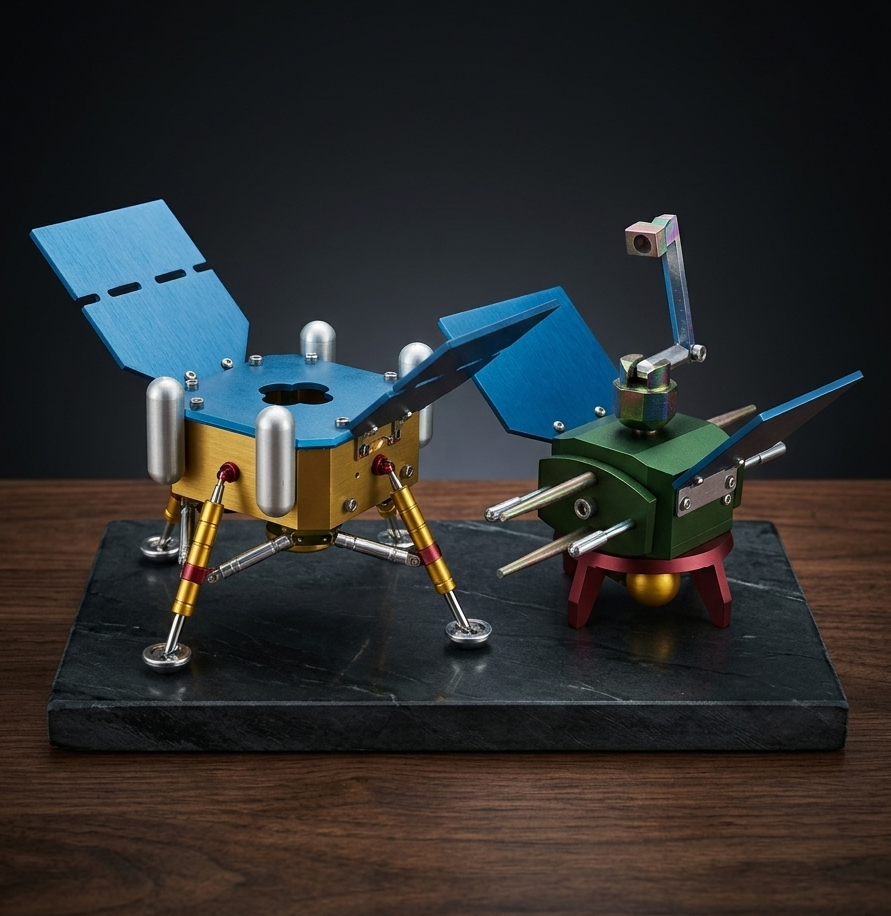
A complete guide to surface treatment and metal finishing for precision engineering parts in Singapore, covering anodizing, plating, electropolishing and passivation, and how to choose the right process by goal, material and industry.
Surface treatment is one of the most decisive yet under-appreciated steps in precision engineering. A part can be machined to perfect tolerances from the right alloy and still fail in service because its surface corroded, galled, lost conductivity or simply looked wrong to the customer. In Singapore's manufacturing ecosystem, where semiconductor, medical-device, aerospace, automotive and general precision firms operate side by side in a hot and humid climate, the finish you specify often determines whether a component lasts for years or returns as a warranty claim. This guide is a practical, engineer-focused overview of the major metal finishing processes available locally, how they work, and how to choose between them by goal, base material and industry.
Active Treatment Pte Ltd has provided surface treatment and electroplating services in Singapore since 2010, working with procurement, design and quality teams across these sectors. The aim here is not to sell a single process but to help you specify the right one. Treat this article as a hub: each section links to a dedicated service page where you can read deeper detail, and to industry pages and focused guides for specific applications.
What Surface Treatment Actually Does
Surface treatment is any controlled process that alters the outermost layer of a component to give it properties the bulk material does not have on its own. The core of the part keeps its mechanical strength and cost advantages, while the surface gains corrosion resistance, hardness, lubricity, solderability, electrical conductivity, a decorative appearance or restored dimensions. Because only microns of material are involved, the right finish is an efficient way to upgrade performance without redesigning the part or switching to an exotic alloy.
Broadly, the processes fall into three families. Conversion coatings, such as anodizing, chromating and passivation, transform the surface chemistry of the metal itself. Deposited coatings, such as electroplating and electroless nickel, add a layer of a different metal. Mechanical treatments, such as sand blasting and hairline buffing, change the texture and stress state of the surface. Many real-world specifications combine families, for example blasting before plating, or plating followed by a chromate seal.
Choosing a Process by Goal
The fastest way to narrow your options is to define the single most important thing the finish must achieve. Most precision parts have one dominant requirement, with secondary ones to balance.
Corrosion Protection
In Singapore's climate, corrosion is the most common reason parts are finished. For steel, zinc plating offers excellent sacrificial protection at low cost, because zinc corrodes preferentially and shields the steel beneath. For more uniform barrier protection on complex shapes, electroless nickel plating deposits an even layer into recesses and bores that electroplating struggles to reach. Aluminium is best protected by anodizing, which seals the surface with a dense oxide, while stainless steel relies on passivation to restore its naturally protective chromium-oxide film. Our guide to rust prevention for metal parts in Singapore goes deeper into selecting corrosion finishes.
Wear, Hardness and Friction
For sliding, rotating or abrasive contact, surface hardness and lubricity matter most. Hard chrome plating produces a very hard, low-friction surface widely used on shafts, rods and tooling. Hard black anodizing (Type III) on aluminium creates a thick, abrasion-resistant oxide that also reduces glare. Electroless nickel, especially higher-phosphorus grades, balances hardness with corrosion resistance and can be heat treated for additional hardness. For an in-depth look, see our hard chrome plating guide and hard black anodizing guide.
Electrical Conductivity and Contact Reliability
Connectors, contacts and RF components need low, stable contact resistance and good solderability. Gold plating provides excellent conductivity, corrosion immunity and a reliable contact surface, often over a nickel underlayer that acts as a diffusion barrier. Nickel plating on its own is a common underlayer and a durable, solderable finish for many electrical parts.
Aesthetics and Finish Quality
Visible components demand consistent colour, gloss or texture. Hairline buffing creates a fine directional grain on stainless steel and aluminium, sand blasting produces a uniform matte texture, and black chrome and black oxide deliver dark, low-reflectance finishes. Anodizing can also be dyed in a range of colours while retaining its protective qualities.
Dimensional Restoration
Worn or undersized parts can often be saved rather than scrapped. Flash chrome plating and hard chrome can rebuild worn surfaces on shafts and tooling, and electroless nickel can add a controlled, uniform thickness to bring a part back to specification. This is frequently more economical and faster than manufacturing a replacement, especially for legacy or long-lead components.
Choosing a Process by Base Material
The base metal sets hard limits on what is possible. Specifying a finish that is incompatible with the substrate is one of the most common mistakes engineers make, so it is worth matching material to process early.
Aluminium
Aluminium and its alloys are the natural candidates for anodizing. Standard aluminium anodizing builds a protective, dyeable oxide for general use, while hard black anodizing targets wear resistance and a dark, non-reflective surface for optical and defence parts. Where aluminium must be electrically conductive or soldered, electroless nickel is often plated onto it instead, because the anodic oxide is an insulator.
Carbon and Alloy Steel
Steel is highly versatile. Zinc plating with a clear or yellow chromate conversion coat is the workhorse for general corrosion protection. Electroless nickel and electroplated nickel add barrier protection and hardness. Hard chrome serves wear and dimensional applications, and black oxide provides a thin, dimensionally negligible black finish with mild corrosion resistance when oiled, popular for fasteners and tooling.
Stainless Steel
Stainless steel already contains chromium, so the priority is to keep its passive film intact and clean. Passivation removes free iron and contaminants and enhances the chromium-rich oxide, while electropolishing goes further by removing a microscopic layer to leave an ultra-smooth, bright, easily cleaned surface. Our electropolishing stainless steel guide explains when each is appropriate.
Brass, Copper and Their Alloys
Copper-based metals are common in electrical and decorative parts. They take gold, nickel and chrome plating readily, and are often nickel-plated as a barrier before a final gold or chrome layer to prevent the copper from diffusing outward and tarnishing the finish over time.
Comparison of Common Surface Treatments
The table below summarises the major processes, their primary benefit and the base metals they suit. Use it as a starting point, then confirm details against your specific function, environment and any governing standard.
| Process | Primary Benefit | Typical Base Metals |
|---|---|---|
| Aluminium anodizing | Corrosion protection and dyeable finish | Aluminium and its alloys |
| Hard black anodizing | Wear resistance and low-reflectance surface | Aluminium and its alloys |
| Zinc plating with chromate | Low-cost sacrificial corrosion protection | Carbon and alloy steel |
| Electroless nickel | Uniform corrosion and wear resistance | Steel, aluminium, copper alloys |
| Nickel plating | Durable, solderable underlayer or finish | Steel, brass, copper |
| Hard chrome plating | Hardness, low friction, dimensional build-up | Steel and cast iron |
| Gold plating | Conductivity and contact reliability | Copper, brass, nickel-plated parts |
| Passivation | Restored corrosion resistance | Stainless steel |
| Electropolishing | Ultra-smooth, clean, bright surface | Stainless steel |
| Black oxide | Thin black finish, minimal dimension change | Steel |
| Sand blasting | Uniform matte texture and surface prep | Most metals |
Combining Processes and Multi-Layer Finishes
Many high-performance components are not finished with a single process but with a deliberate sequence, because no one coating is best at everything. The most common pairing is a duplex system in which a base layer provides one property and a top layer provides another. A nickel underlayer beneath gold, for instance, blocks copper diffusion and adds durability while the thin gold layer delivers conductivity and tarnish resistance at lower cost than a thick gold deposit would. Similarly, zinc plating is almost always followed by a chromate conversion coat, because the chromate dramatically slows the formation of white corrosion products on the fresh zinc and can add colour.
Mechanical preparation is the other half of the equation. Sand blasting or buffing before plating or anodizing controls the final texture and removes scale, oxides and contamination that would otherwise cause poor adhesion or a blotchy appearance. Because a deposited or grown layer follows the contours beneath it, a rough or inconsistent substrate will telegraph straight through to the visible surface. Planning the full route, from cleaning through pre-treatment to final coat and seal, is what separates a finish that merely looks acceptable on day one from one that performs for years. When in doubt, describe the end use to your finisher and let them propose the sequence rather than dictating individual steps in isolation.
Cost, Lead Time and Practical Trade-offs
Specifying the most capable finish for every part is rarely the most economical decision. Each process carries a different cost driver: bath chemistry and precious metals for gold, energy and masking labour for hard chrome and hard anodizing, and batch handling for high-mix, low-volume work. A clear understanding of the actual operating environment lets you avoid paying for performance the part will never use, such as a thick wear coating on a component that only needs basic corrosion protection. Conversely, under-specifying to save a few cents per part can be far more expensive once field failures, rework and reputational cost are counted.
Lead time also varies. Conversion coatings such as passivation and chromating are relatively quick, while thick electroless nickel, hard chrome build-up and multi-layer systems take longer because deposition is slow and inspection is more involved. Geometry matters too: deep blind holes, very large parts and delicate features can require special racking or fixturing that affects both price and schedule. Sharing realistic quantities, delivery expectations and any peak-demand patterns early allows a finisher to plan capacity and give you a dependable date rather than an optimistic one.
How the Major Processes Work
Understanding the mechanism helps you anticipate effects on tolerances, coverage and appearance.
Anodizing
Anodizing is an electrochemical oxidation that grows a controlled oxide layer out of the aluminium itself. The part is the anode in an acidic electrolyte, and the resulting porous oxide can be dyed and then sealed. Because the oxide grows partly into and partly out of the surface, the part gains a small, predictable thickness. Type III hard anodizing uses lower temperatures and higher voltages to produce a thicker, harder coating.
Electroplating
Electroplating uses electric current to deposit metal ions from a solution onto a conductive part. Zinc, nickel, chrome and gold are all applied this way. Coverage depends on current distribution, so recessed areas plate more thinly than prominent edges; racking and part geometry matter. Plating adds thickness on each surface, which must be allowed for on threads and tight tolerances.
Electroless Nickel
Electroless nickel needs no electric current. A chemical reducing agent deposits a nickel-phosphorus alloy uniformly across the whole wetted surface, including blind holes and complex internal features. This uniformity is its key advantage over electroplating, and phosphorus content can be tuned to favour hardness or corrosion resistance. See our electroless nickel plating guide for selection detail.
Passivation and Electropolishing
Passivation immerses stainless steel in an acid solution that dissolves surface iron and enriches the protective chromium oxide, removing virtually no measurable thickness. Electropolishing is the electrochemical reverse of plating: it removes a thin layer preferentially from peaks, leaving a smoother, brighter and more corrosion-resistant surface that resists fouling and is easy to clean.
Mechanical Finishing
Sand blasting propels abrasive media at the surface to clean it, remove scale, create a uniform matte texture, or prepare it for subsequent coating. Hairline buffing uses controlled abrasion to produce a fine, directional grain prized on visible stainless and aluminium surfaces. These steps are often the foundation that determines how a later plated or anodized layer looks.
Surface Treatment by Industry
Different sectors favour different finishes because their failure modes and standards differ. Below are the patterns we see most often among Singapore manufacturers.
Semiconductor and electronics work demands cleanliness, particle control and conductivity, so electroless nickel, hard anodizing for chamber and handling parts, and gold plating for contacts are common. See surface treatment for the semiconductor industry and the focused guide on semiconductor surface treatment.
Medical devices prioritise biocompatible, easily cleaned and corrosion-resistant surfaces, which makes passivation and electropolishing of stainless steel central. Explore medical surface treatment and our medical device finishing guide.
Aerospace and defence parts often require hard anodizing for wear and low reflectance, plus rigorously documented processes. See defence surface treatment.
Automotive components rely on zinc plating, chromating and hard chrome for corrosion and wear. Visit automotive surface treatment and the automotive parts finishing guide.
General precision manufacturing and construction cover a broad mix of the above. See manufacturing surface treatment, construction surface treatment and our overview of surface treatment for precision manufacturing.
How to Specify a Finish and What to Send Your Finisher
Clear specifications prevent rework, delays and disputes. A finisher can only deliver what the drawing and accompanying notes describe, so give complete information up front.
- Base material and alloy, since this dictates which processes are feasible.
- The process and any governing standard or class, so expectations on thickness and properties are unambiguous.
- Target thickness or coating class, recognising that plating adds material and electropolishing removes it.
- Critical dimensions and tolerances, including threads, bores and sealing faces that the finish must not compromise.
- Areas to mask, such as bearing fits, electrical grounds or datum surfaces that must stay bare.
- Functional or cosmetic intent, so the finisher can advise if a different process serves you better.
- Quantity, handling points and packaging needs, plus any cleanliness or compliance requirements.
When tolerances are tight, discuss the build-up or removal early. Threads in particular can become out of class if a plated layer is applied without an allowance, and masking may be needed to protect close-fitting features.
Quality, Inspection and Documentation
A reliable finish is a controlled finish. Reputable finishers verify coating thickness using methods such as magnetic, eddy-current or microscopic cross-section measurement, and check adhesion, appearance and coverage against the agreed standard. Pre-treatment, cleaning and bath chemistry are monitored because most coating failures originate in poor surface preparation rather than the coating step itself.
For regulated sectors, traceability matters as much as the finish. Batch records, process parameters and inspection results provide evidence that each lot met specification, which is essential for medical, aerospace and defence supply chains. When you discuss a job, ask what inspection and documentation are included so there are no surprises at incoming quality control.
Common Mistakes to Avoid
A handful of recurring issues account for most finishing problems. Specifying a process that is incompatible with the base metal, such as anodizing on steel, is the most fundamental. Ignoring the dimensional effect of a coating on tight tolerances is another, as is failing to mask features that must remain bare or electrically conductive. Engineers sometimes select a purely cosmetic finish where a functional one is needed, or vice versa, paying for performance they will never use. Finally, leaving the finish decision until after the part is designed can force costly compromises; involving your finisher early often yields a better and cheaper result.
Bringing It Together
Surface treatment turns a well-made part into a part that performs reliably in the real world. By starting with your primary goal, respecting the limits of the base material, and matching the choice to your industry's demands, you can specify with confidence. Use the comparison table to shortlist candidates, then validate against function, environment and any standard before committing. The deeper service and industry pages linked throughout this guide will help you finalise the detail for your specific component.
Frequently Asked Questions
What is surface treatment in precision engineering?
Surface treatment is any controlled process that changes the outer layer of a metal part to improve corrosion resistance, hardness, wear life, electrical performance, appearance or dimensions. Common methods include anodizing, electroplating, electroless nickel, electropolishing, passivation and mechanical finishing. The base metal stays the same while the surface gains properties it did not originally have.
How do I choose the right surface finish for my part?
Start with your primary goal, then the base metal, then the operating environment and any industry specifications. Corrosion protection, wear resistance, electrical conductivity, cosmetics and dimensional restoration each point to different processes. Aluminium suits anodizing, steel suits zinc or nickel plating, and stainless steel suits passivation or electropolishing. A finisher can advise once they know material, function and tolerances.
What is the difference between anodizing and plating?
Anodizing grows a hard oxide layer out of an aluminium part itself by electrochemical oxidation, so it does not add a different metal. Plating deposits a separate metal, such as nickel, zinc, chrome or gold, onto the surface using electric current or chemical reduction. Anodizing only works on aluminium and certain alloys, while plating works on a wide range of base metals.
Which surface treatment is best for corrosion resistance in Singapore's humid climate?
Singapore's hot, humid and salt-laden air accelerates corrosion, so the right choice depends on the base metal. Zinc plating with chromate protects steel sacrificially, electroless nickel gives uniform barrier protection, anodizing seals aluminium, and passivation restores the protective film on stainless steel. For demanding parts, finishers often combine processes or specify thicker coatings.
Does surface treatment change the dimensions of a part?
Most processes add or remove a small, predictable amount of material. Plating and electroless nickel build thickness, hard anodizing grows partly into and partly out of the surface, while electropolishing and passivation remove a very thin layer. Engineers should account for the finish when setting tolerances and tell the finisher about critical dimensions, threads and masked areas before work begins.
How do I prepare drawings and specifications for a metal finisher?
Provide the base material and alloy, the required process and any standard or spec, the target thickness or class, critical dimensions and tolerances, areas to mask, and the functional or cosmetic intent. Note quantities, handling points and any cleanliness or RoHS requirements. Clear information lets the finisher confirm feasibility, racking and quality checks before production.
Need Help Choosing the Right Surface Treatment?
Not sure which surface treatment your spare parts need?
Active Treatment Pte Ltd has more than 15 years of experience helping manufacturers, precision engineering firms, semiconductor companies, medical device suppliers and industrial businesses improve corrosion resistance, wear resistance and component lifespan.
Whether you require anodizing, electroless nickel plating, zinc plating, hard chrome plating, electropolishing or another industrial surface treatment, our Singapore engineering team can review your specifications and recommend the most suitable process.
Send your drawings, part specifications or project requirements for a technical consultation.
Email activetreatment88@yahoo.com.sg or phone +65 6352 9846.
Request Technical Consultation · Request Quotation · View Surface Treatment Services
Recommended Services
- Electroless Nickel Plating — Auto-catalytic nickel-phosphorus plating delivering perfectly uniform thickness on complex geometries, blind holes and threads — with medium- and high-phosphorus grades for hardness or 1,000+ hours of corrosion resistance.
- Hard Chrome Plating — Thick industrial hard chrome (5–500+ µm, HV 900–1100) for wear resistance, low friction, and dimensional restoration of hydraulic cylinders, piston rods, and tooling.
- Aluminium Anodizing — Electrochemical process that converts the metal surface into a decorative, durable, corrosion-resistant anodic oxide finish. Available in a wide spectrum of colours.
- Zinc Plating — Offers excellent corrosion resistance with a uniform zinc layer. Available in clear, yellow, and black chromate passivations to meet varied engineering and aesthetic requirements.
- Passivation — Chemical treatment for stainless steel that removes free iron contamination from the surface and maximises the formation of a self-healing, passive chromium oxide layer.