Electropolishing Stainless Steel in Singapore: The Definitive Guide
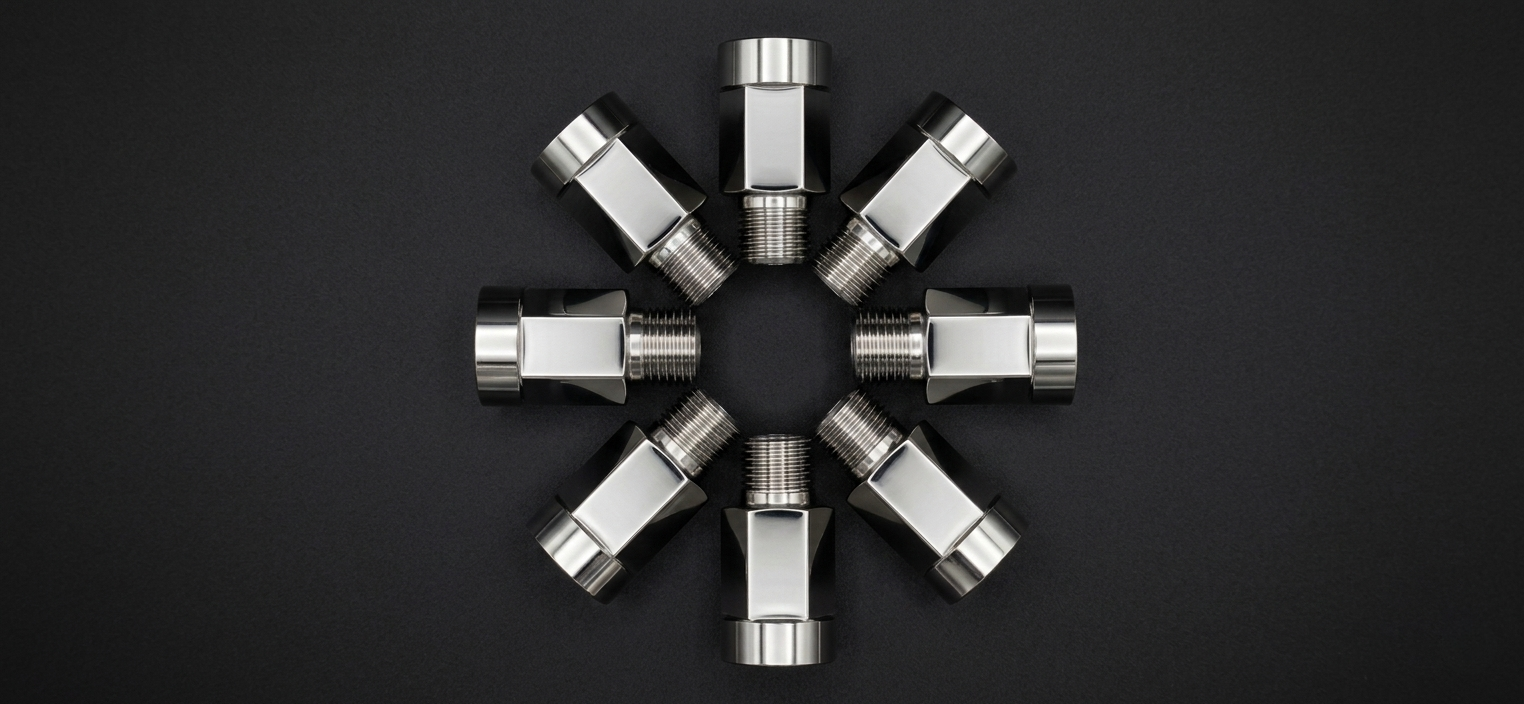
A complete engineer's guide to electropolishing stainless steel in Singapore: how anodic dissolution smooths and deburrs parts, lowers Ra, enriches chromium for better corrosion resistance, and why it matters for medical, pharma and semiconductor work.
Electropolishing is one of the most effective ways to finish stainless steel when cleanliness, corrosion resistance and a bright, ultra-smooth surface genuinely matter. Unlike mechanical methods that abrade the surface, electropolishing dissolves a precisely controlled layer of metal electrochemically, leaving behind a passive, chromium-rich surface that is easier to clean, more corrosion resistant and visually superior. For engineers and procurement teams in Singapore working across medical devices, pharmaceutical equipment, semiconductor tooling and food processing, it is often the difference between a part that merely meets a drawing and a part that performs reliably in service. This guide explains what electropolishing is, how it works on stainless steel, where it adds the most value, how it compares with mechanical polishing and passivation, and exactly how to specify it so you get consistent, repeatable results.
What Electropolishing Actually Is
Electropolishing is an electrochemical surface finishing process. The stainless steel part is immersed in a temperature-controlled electrolyte and connected as the anode in a DC circuit, with a cathode completing the cell. When current flows, metal ions are dissolved from the surface of the part. Because the process removes metal rather than adding it, electropolishing is frequently described as reverse electroplating. In conventional plating the workpiece is the cathode and metal builds up on it; in electropolishing the workpiece is the anode and metal is taken away in a controlled, selective manner.
The key to the process is that dissolution is not uniform at the microscopic scale. A viscous boundary layer forms next to the surface, and this layer is thinner over peaks and thicker in valleys. Current density is therefore concentrated on high points, burrs and sharp edges, so those features dissolve faster than recesses. The net effect is micro-smoothing: the surface profile is levelled from the top down, peaks are knocked off, fine burrs disappear and the overall roughness falls. This is fundamentally different from grinding or buffing, which deform and smear the surface and can leave embedded abrasive and a stressed, disturbed layer behind.
How Electropolishing Works on Stainless Steel
Stainless steel owes its corrosion resistance to chromium, which forms a thin, stable, self-healing oxide film. The everyday performance of a stainless part depends heavily on the condition of the outermost few nanometres of that surface. Machining, grinding, forming and welding all disturb this layer: they smear metal, embed free iron and other contaminants, create micro-crevices and leave a mechanically worked skin that is more prone to localised corrosion.
Electropolishing addresses all of this at once. As the process dissolves the surface, it preferentially removes iron and other less noble constituents while leaving the surface relatively enriched in chromium. The result is a clean, passive, chromium-rich outer layer with the free iron and embedded contamination stripped away. At the same time the micro-roughness is reduced, micro-crevices that can trap corrosive media and bacteria are opened up and smoothed, and the worked surface layer left by machining is removed to expose sound base metal. In short, one process improves cleanliness, corrosion resistance and surface finish together.
Micro-smoothing and deburring
Because current density concentrates on raised features, electropolishing is excellent at removing fine burrs and softening sharp edges that are difficult or impossible to reach with hand tools. It is particularly valuable on complex geometries, internal bores, fine slots, mesh, perforated sheet and intricate machined parts where mechanical deburring cannot consistently reach. It will not remove heavy burrs or deep tool marks, so it complements rather than replaces primary deburring, but for fine edge conditioning and the removal of micro-burrs it is highly effective and very repeatable.
Surface roughness and Ra reduction
One of the most quoted benefits of electropolishing is the reduction in surface roughness, usually measured as Ra. As a general rule electropolishing can roughly halve the Ra of a reasonably prepared surface, and on well-finished parts it can produce very low Ra values suitable for hygienic and high-purity applications. The important point for designers is that electropolishing improves an existing finish; it does not hide deep scratches, pits or coarse machining marks. The smoother and more uniform the starting surface, the better and more consistent the electropolished result. Where a specific low Ra is required, the pre-finishing route, often a sequence of mechanical finishing steps, has to be matched to that target.
Key Benefits of Electropolishing
- Improved corrosion resistance. Removing free iron and embedded contamination and enriching the surface in chromium produces a stronger, more uniform passive film and better resistance to localised attack such as pitting and crevice corrosion.
- Superior cleanability and reduced bacterial adhesion. A smoother, crevice-free surface has fewer sites for residues, biofilm and bacteria to lodge, so parts are easier to clean and sanitise. This is central to medical, pharmaceutical and food applications.
- Micro-deburring and edge conditioning. Fine burrs are removed and sharp edges softened in areas that hand tools cannot reach.
- A bright, decorative finish. Electropolishing leaves a clean, reflective lustre without the smeared appearance of buffing.
- Removal of the worked surface layer. Stripping the machining-affected skin exposes sound metal and can reduce the surface stresses and contamination that promote corrosion.
- Better downstream performance. Smoother surfaces shed particles and contamination more readily, which matters for high-purity fluid handling, ultra-high vacuum and semiconductor environments.
Suitable Stainless Steel Grades
Electropolishing is most commonly and most successfully applied to austenitic stainless steels. The 300 series grades, especially 304 and 316L, respond extremely well, delivering bright, smooth, low-roughness finishes with excellent corrosion behaviour. 316L, with its molybdenum content and low carbon, is the usual choice where the most demanding corrosion resistance is required, such as pharmaceutical process equipment and implantable or surgical applications. 304 is widely used for general hygienic and architectural work where its corrosion resistance is sufficient.
Results depend on microstructure as much as nominal grade. Clean, homogeneous wrought material electropolishes more uniformly than material with heavy inclusions, segregation or porosity. Free-machining grades such as 303 contain sulphur additions that can lead to a less uniform finish. Higher-carbon martensitic grades, duplex stainless and castings can be electropolished but tend to be more variable, so it is good practice to confirm the outcome on representative sample parts before committing a production batch. Welds also behave differently from parent metal, and heat-affected zones and weld discolouration usually need attention; electropolishing improves weld areas but very heavy heat tint may need mechanical or chemical treatment first.
Masking and Process Control
Because electropolishing removes metal, areas that are dimensionally critical, threaded features that must not lose material, sealing faces and bearing surfaces sometimes need to be masked or otherwise protected. Masking, careful racking and the positioning of the part relative to the cathode all influence how evenly current is distributed and therefore how uniform the finish is. Good fixturing ensures consistent contact, avoids shadowing in recesses and prevents localised over-polishing on edges. For parts with deep bores or complex internal passages, auxiliary cathodes can be used to drive current into otherwise starved areas.
Process variables, including electrolyte composition and temperature, current density, voltage and time, are controlled to suit the grade, geometry and the amount of metal to be removed. Because all of these interact, electropolishing is best treated as a developed process for a given part rather than a single fixed recipe, particularly when tight roughness targets or dimensional limits are involved.
Electropolishing and Passivation
Engineers often ask whether they need both electropolishing and passivation. The two processes overlap in intent but work differently. Passivation is typically a chemical treatment, using acid solutions, that removes free iron and contamination from the stainless surface and allows the protective chromium oxide film to reform. It does not change the surface roughness or appearance significantly.
Electropolishing achieves the cleaning and chromium-enrichment benefits of passivation and goes further by also smoothing the surface and removing the worked layer. In practice an electropolished surface is usually already passive and frequently more corrosion resistant than a passivated machined surface. Despite this, some specifications and quality systems still call for a distinct passivation step, or for a passivation verification test, after electropolishing. Whether you need one, the other or both comes down to your drawing callouts, the governing industry standard and the service conditions of the part. If you are unsure, share the application and the specification and we can advise on the most appropriate sequence. For a broader view of how these surface treatments fit together across precision parts, see our overview of surface treatment for precision engineering parts in Singapore.
Applications and Industries
Electropolishing is specified wherever cleanliness, corrosion resistance and surface quality are critical. The following industries are typical, and Active Treatment supports customers across all of them in Singapore.
Medical and surgical
Surgical instruments, implants, device components and handling equipment benefit from the smooth, clean, corrosion-resistant surface electropolishing provides. The reduced micro-roughness lowers the number of sites where contamination and bacteria can lodge, supporting effective cleaning and sterilisation. Burr-free edges also improve safety and function. Learn more about how we support the medical device industry with stainless finishing, and see our guide to surface treatment for medical devices in Singapore.
Semiconductor and high-purity
Gas delivery components, vacuum chambers, fittings and tooling used in semiconductor manufacturing demand surfaces that release minimal particles and outgas as little as possible. Electropolished stainless presents a smooth, clean surface that is easier to keep contamination-free and performs well under high-purity and vacuum conditions. Explore our work supporting the semiconductor industry for more on high-purity surface requirements.
Pharmaceutical and food processing
Tanks, piping, mixing equipment and contact parts in pharmaceutical and food production need hygienic, cleanable surfaces that resist corrosion from process media and cleaning chemicals. Electropolishing delivers the smooth, crevice-reduced finish that hygienic design relies on, helping prevent product hold-up and microbial growth.
Precision engineering and general manufacturing
Beyond the most regulated sectors, electropolishing is used wherever stainless parts need a clean, bright, corrosion-resistant finish, from fluid-handling components to architectural and decorative items. It pairs well with other finishing capabilities, and customers across general manufacturing often combine it with complementary treatments.
Electropolishing vs Mechanical Polishing vs Passivation
Choosing the right finishing route means understanding what each process does and does not do. Mechanical polishing abrades and refines the surface but can smear metal, embed abrasive and leave a stressed layer. Passivation chemically cleans and re-passivates but does not change roughness. Electropolishing smooths, cleans and enriches chromium electrochemically. The table below summarises the practical differences.
| Property | Electropolishing | Mechanical polishing | Passivation |
|---|---|---|---|
| Mechanism | Electrochemical metal removal | Physical abrasion and buffing | Chemical cleaning of surface |
| Surface roughness (Ra) | Reduced, often by around half | Reduced, but can smear and stress | Essentially unchanged |
| Removes free iron and contamination | Yes, and enriches chromium | No, can embed contaminants | Yes |
| Corrosion resistance | Improved, uniform passive layer | Variable, can be reduced | Restored to base level |
| Micro-deburring | Yes, reaches complex geometry | Limited to accessible areas | No |
| Effect on dimensions | Slight, controlled removal | Slight, operator dependent | Negligible |
| Best for | Hygienic, high-purity, corrosion-critical parts | Cosmetic finishing, heavy stock removal | Restoring passivity without smoothing |
These processes are not mutually exclusive. A common production route is to mechanically finish a part to a controlled roughness, then electropolish it to smooth, clean and passivate the surface, with a passivation verification step where the specification requires it. The right combination depends on the starting condition, the target finish and the standard you are working to.
How to Specify Electropolishing and What to Send a Finisher
Clear information up front leads to consistent results and an accurate quote. When you brief a finisher, include the following.
- Material grade and condition. State the exact stainless grade, for example 316L, and note if parts are welded, formed or cast, as these affect the process.
- Drawings with critical dimensions and tolerances. Identify any features that must not lose material so they can be masked or controlled. Because electropolishing removes a small amount of metal and rounds sharp edges, tight tolerances and sharp corners need to be flagged.
- Target finish. Specify the required Ra or finish callout. If you only need a clean, bright, corrosion-resistant surface without a numerical target, say so, as this gives more flexibility.
- Applicable specification. Cite any industry standard or internal specification, and state whether a separate passivation or verification test is required.
- Application and environment. Tell us how the part is used, for example a surgical, pharmaceutical, food-contact or semiconductor application, so pre-finishing, racking and inspection can be tailored appropriately.
- Quantities and handling needs. Batch sizes, packaging and any cleanliness or handling requirements help us plan the work and protect finished parts.
Sharing sample parts or photographs is always helpful, especially for complex geometries or where you have a specific appearance in mind. The more context we have, the better we can match the pre-finishing and electropolishing route to your needs.
Quality, Inspection and Limitations
Electropolishing quality is judged on roughness, appearance, corrosion behaviour and dimensional conformance. Roughness can be measured with a profilometer against the target Ra. Visual inspection checks for uniform brightness and the absence of staining, etching or uneven areas. Where corrosion performance is critical, standard passivity or corrosion tests can be used to verify the surface. Dimensional checks confirm that critical features remain within tolerance after the controlled metal removal.
It is equally important to understand the limitations. Electropolishing improves a surface; it cannot remove deep scratches, pits, heavy tool marks or coarse defects, which must be addressed before electropolishing. Results are sensitive to base material quality, so inclusions, segregation and porosity can show through as non-uniform finish. Heavy weld heat tint and oxide usually need treatment beforehand. And because the process removes metal and preferentially attacks edges, parts with very sharp required corners or extremely thin sections need careful control. Recognising these factors early, and discussing them with your finisher, avoids surprises and gives the best outcome.
Why Work With Active Treatment in Singapore
Active Treatment Pte Ltd has provided metal finishing and surface treatment services in Singapore since 2010, supporting precision engineering, semiconductor, medical-device, automotive and general manufacturing customers. Our electropolishing service for stainless steel is designed around consistent, repeatable results, with attention to pre-finishing, masking, racking and inspection so that parts meet both their drawings and their real-world performance requirements. Because we also offer complementary processes, including passivation and a wide range of plating and finishing capabilities, we can advise on and deliver the complete finishing route a part needs rather than just a single step.
Whether you need a low Ra hygienic finish on 316L pharmaceutical components, clean high-purity parts for semiconductor equipment, or simply a brighter, more corrosion-resistant stainless finish for precision parts, we can help you specify and produce it.
Get a Quote for Electropolishing in Singapore
Frequently Asked Questions
What is electropolishing and how is it different from electroplating?
Electropolishing is an electrochemical process that removes a thin, controlled layer of metal from a part to smooth and brighten it. It is sometimes called reverse electroplating because the part is the anode and metal dissolves off rather than building up. Electroplating deposits metal onto a part, while electropolishing dissolves metal away to reduce roughness and clean the surface.
Which stainless steel grades electropolish well?
Austenitic grades such as 304 and 316L respond very well and are the most common candidates, giving bright, smooth, low-roughness finishes. 316L is preferred where maximum corrosion resistance is needed. Free-machining grades like 303 and some high-carbon martensitic or cast stainless can be more variable because of inclusions and segregation, so results should be confirmed on sample parts first.
Does electropolishing replace passivation?
Electropolishing inherently enriches the surface in chromium and removes free iron, so it provides much of what passivation delivers and often improves corrosion resistance beyond a passivated machined surface. Some specifications still call for a separate passivation step or a verification test after electropolishing. The right approach depends on your drawing, industry standard and the service environment of the part.
How much surface roughness reduction can I expect?
Electropolishing typically reduces Ra by roughly 50 percent on a reasonably finished surface, and well-prepared parts can drop into very low single-digit micro-inch or sub-micron Ra ranges. The exact result depends on the starting roughness, grade, microstructure and how much material is removed. Electropolishing improves an existing finish rather than hiding deep scratches, so good pre-finishing matters.
Will electropolishing change the dimensions of my parts?
Yes, slightly. Electropolishing removes metal, generally in the order of a few microns to tens of microns per surface, and it preferentially attacks high points and sharp edges. For most parts this is negligible, but for tight-tolerance features, sharp corners or thin sections it should be accounted for on the drawing. Share your tolerances so the process can be controlled accordingly.
What should I send to a finisher for an electropolishing quote?
Provide the stainless grade, drawings with critical dimensions and tolerances, the target Ra or finish callout, the applicable specification, quantities and any areas to be masked or kept dimensionally critical. Photos or sample parts help. Telling us how the part is used, for example a medical, pharmaceutical, food or semiconductor application, lets us tailor pre-finishing, racking and inspection to your needs.
Need Help Choosing the Right Surface Treatment?
Not sure which surface treatment your spare parts need?
Active Treatment Pte Ltd has more than 15 years of experience helping manufacturers, precision engineering firms, semiconductor companies, medical device suppliers and industrial businesses improve corrosion resistance, wear resistance and component lifespan.
Whether you require anodizing, electroless nickel plating, zinc plating, hard chrome plating, electropolishing or another industrial surface treatment, our Singapore engineering team can review your specifications and recommend the most suitable process.
Send your drawings, part specifications or project requirements for a technical consultation.
Email activetreatment88@yahoo.com.sg or phone +65 6352 9846.
Request Technical Consultation · Request Quotation · View Surface Treatment Services
Recommended Services
- Electropolishing — Electrochemical micro-smoothing process that removes surface irregularities, deburrs, and produces a mirror-bright, ultra-clean finish ideal for medical and semiconductor applications.
- Passivation — Chemical treatment for stainless steel that removes free iron contamination from the surface and maximises the formation of a self-healing, passive chromium oxide layer.
- Electroless Nickel Plating — Auto-catalytic nickel-phosphorus plating delivering perfectly uniform thickness on complex geometries, blind holes and threads — with medium- and high-phosphorus grades for hardness or 1,000+ hours of corrosion resistance.
- Hairline Buffing — Directional hairline brushing and mechanical polishing produce consistent cosmetic finishes ranging from a fine satin texture to a high-gloss mirror surface on metals.