Surface Treatment for Medical Devices in Singapore
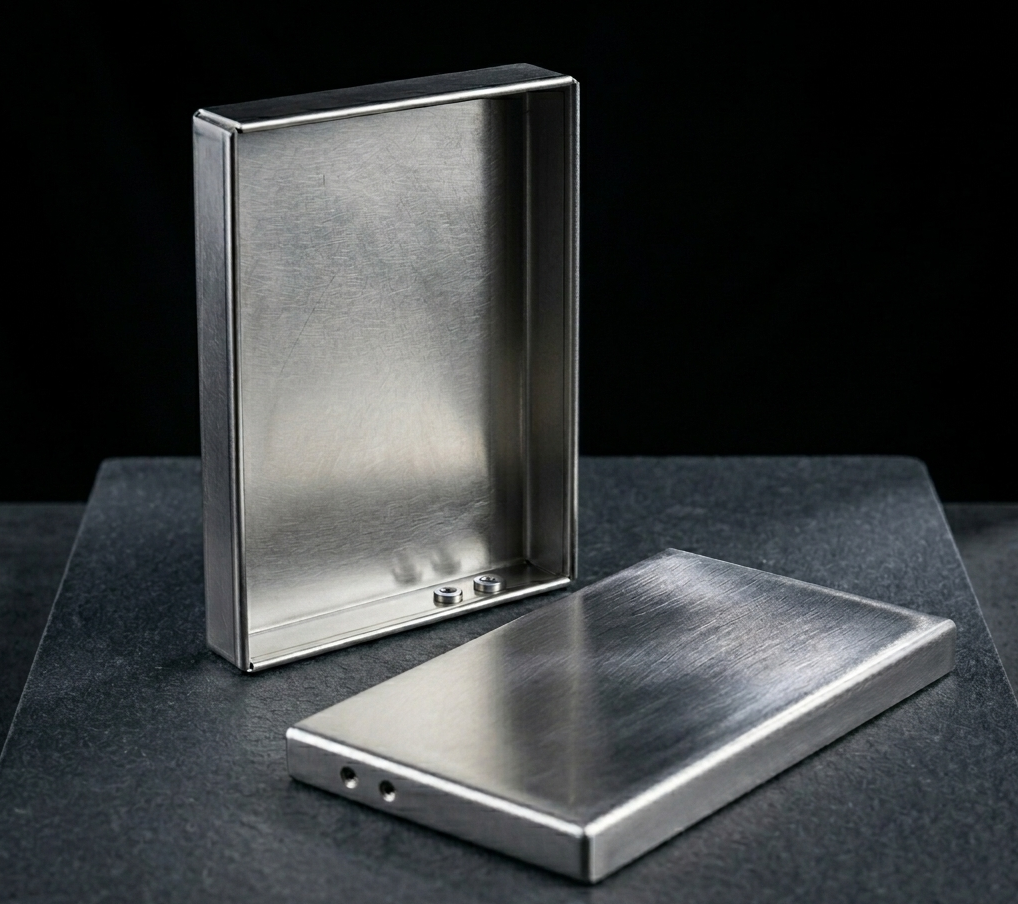
How electropolishing, passivation, electroless nickel and gold plating help Singapore medical-device makers achieve biocompatibility, sterilisation resistance, corrosion control and cleanability for surgical and fluid-path components.
Medical-device manufacturing places some of the most demanding requirements on metal surfaces of any industry. A surgical instrument must survive hundreds of cleaning and sterilisation cycles without corroding. A fluid-path component must present a smooth, cleanable surface that does not trap residues. An electrode or sensing contact must conduct reliably for the life of the device. Behind each of these requirements sits a carefully chosen surface treatment. For manufacturers and contract producers in Singapore, getting that choice right is central to product safety, regulatory readiness and long-term reliability.
Active Treatment Pte Ltd has provided metal finishing and surface treatment services in Singapore since 2010, supporting precision engineering and the broader medical-device industry with processes such as passivation, electropolishing, electroless nickel and selective gold plating. This guide explains how the most relevant treatments work, where each one fits, and how to specify them so your components meet biocompatibility, sterilisation, corrosion-resistance, cleanability and traceability needs. Throughout, we refer to components and hardware rather than making claims about implants, which carry their own distinct regulatory and material pathways.
Why Surface Treatment Matters in Medical Manufacturing
The base metal of a component is only part of the story. The surface is where the part meets the patient, the clinician, the cleaning chemistry, the sterilant and the surrounding fluids. Even a high-grade stainless steel can corrode, stain or harbour contamination if its surface is left in the as-machined condition with embedded iron, micro-burrs and a rough topography. Surface treatment transforms that surface into one that is corrosion resistant, clean and predictable.
Five priorities tend to drive every finishing decision for medical hardware. Biocompatibility concerns how the surface interacts with tissue and fluids, which is influenced by the material and the finish, supported by appropriate testing. Sterilisation compatibility means the finish must withstand repeated autoclaving, chemical sterilants or other validated methods without degrading. Corrosion resistance protects against pitting and rust during use, cleaning and storage. Cleanability depends heavily on surface smoothness and the absence of crevices. Traceability ties the finished part back to a documented, repeatable process. A good finishing partner addresses all five rather than just one.
Passivation of Stainless Steel
Passivation is often the foundation treatment for stainless-steel medical components. Stainless steel resists corrosion because of a thin, naturally forming chromium oxide layer. During machining, grinding and handling, free iron and other contaminants become embedded in the surface, and these particles can initiate rust and pitting. Passivation is a controlled chemical process that dissolves and removes that free iron and other surface contamination, allowing a cleaner, more chromium-rich and more uniform passive layer to re-form.
How passivation works
The parts are first thoroughly cleaned and degreased, since oils and shop soils will otherwise interfere with the chemistry. They are then immersed in a passivating solution, historically nitric-acid based but increasingly citric-acid based for many applications, under controlled concentration, temperature and time. The acid preferentially attacks iron-rich sites while leaving the chromium intact, after which the surface is rinsed and allowed to repassivate. The process does not deposit a coating and does not measurably change dimensions, which makes it attractive for precision parts that must hold tight tolerances.
Where passivation fits
Passivation suits surgical instruments, brackets, housings, fasteners and structural hardware made from martensitic, austenitic or precipitation-hardening stainless steels. It is particularly important after machining operations that smear iron across the surface and after assembly steps such as welding, which can leave heat tint and chromium-depleted zones. Many manufacturers specify passivation as a final step precisely because it restores corrosion resistance to surfaces that fabrication has compromised.
Electropolishing for Cleanability and Smoothness
Where passivation is a chemical treatment that leaves the texture largely unchanged, electropolishing is an electrochemical process that actively removes a thin layer of metal from the surface. The part becomes the anode in an electrolyte, and material is dissolved preferentially from peaks and high points. The result is a surface that is smoother, brighter and microscopically cleaner, with reduced roughness and rounded micro-edges.
The cleanability advantage
For medical applications, the value of electropolishing lies largely in cleanability. A smoother surface with fewer peaks, valleys and crevices gives bacteria, biofilm and residues fewer places to lodge, and it is easier to clean and rinse between uses. Electropolishing also deburrs fine features and can improve the appearance of fluid-path components, sensor housings and instruments. Because the process removes the outermost layer, including embedded contaminants, an electropolished stainless surface is frequently left in an inherently passivated state, although passivation can still be specified to confirm and standardise the result.
Considerations and limits
Electropolishing removes material, so it must be accounted for in tolerancing, especially on thin walls, sharp edges that must stay sharp, and precise sealing surfaces. The current distribution is not perfectly uniform on complex geometries, so deeply recessed or shielded areas polish less aggressively than exposed faces. Sharing the drawing and identifying critical surfaces early lets the finisher plan fixturing and predict stock removal. For a deeper look at the process on stainless, see our guide to electropolishing stainless steel in Singapore.
Electroless Nickel for Complex Geometries
Electroless nickel plating deposits a nickel-phosphorus alloy through an autocatalytic chemical reaction rather than an external electric current. The defining characteristic of this process is exceptional thickness uniformity. Because it does not rely on current density, electroless nickel coats bores, blind holes, threads, internal channels and intricate features at essentially the same thickness as exposed surfaces, avoiding the heavy edge build-up and thin recesses typical of conventional electroplating.
Properties that matter for medical hardware
Electroless nickel provides good corrosion resistance, hardness and wear resistance, and the phosphorus content can be tuned to favour particular properties. Higher-phosphorus deposits generally offer better corrosion resistance and are largely non-magnetic, while the coating can be heat treated to increase hardness for wear-prone components. This combination makes electroless nickel useful for fluid-path parts, valve and pump components, fixtures and tooling, and hardware where a hard, uniform and corrosion-resistant surface is needed across a complicated shape. Our electroless nickel plating guide covers the metallurgy and specification options in more detail.
As with any plated coating intended for medical use, adhesion, thickness and the absence of porosity should be defined and verified, and the suitability of nickel for a given contact scenario should be assessed against the device requirements. The right approach is to align the coating choice with the cleaning, sterilisation and contact conditions the part will actually experience.
Gold Plating for Electrodes and Contacts
Some medical hardware depends on stable electrical performance rather than mechanical durability alone. Electrodes, sensing contacts, connector pins and signal interfaces in diagnostic, monitoring and electrosurgical equipment must transfer current or signals reliably over the life of the device. Gold plating is the classic solution because gold does not oxidise or tarnish under normal conditions, so the contact surface keeps a low, stable and repeatable contact resistance instead of drifting as base metals would.
How gold plating is built up
Gold is typically applied as a thin layer over an underlying nickel barrier, which prevents diffusion of the base metal into the gold and provides a hard, supporting foundation. The gold thickness is matched to the duty: thinner deposits suit static contacts, while connectors that mate and unmate repeatedly benefit from greater thickness for wear life. Gold plating is frequently applied selectively, masking the part so that only the functional contact area is plated, which controls cost and confines the finish to where it is needed. This selective approach is common for electrode tips and contact zones on otherwise unplated assemblies.
Choosing the Right Finish: A Comparison
No single treatment is best for every medical component. The right choice depends on the base material, the geometry, whether the priority is corrosion resistance, cleanability, wear or electrical performance, and the cleaning and sterilisation regime. The table below summarises how the main processes compare for typical medical hardware. Treat any figures as general industry ranges rather than guarantees, since exact results depend on alloy, process control and part design.
| Process | What it does | Primary benefit | Best-fit medical components | Dimensional impact |
|---|---|---|---|---|
| Passivation | Removes free iron, enriches chromium oxide layer | Restores and improves corrosion resistance | Surgical instruments, stainless housings, fasteners | Negligible, no coating added |
| Electropolishing | Electrochemically removes a thin surface layer | Smoother, cleaner, more easily cleaned surface | Fluid-path parts, instruments, sensor housings | Small material removal, must be toleranced |
| Electroless nickel | Deposits uniform nickel-phosphorus coating | Uniform coverage, hardness, corrosion resistance | Valves, pumps, complex internal geometries, tooling | Adds controlled, uniform thickness |
| Gold plating | Thin gold over a nickel barrier | Stable, low electrical contact resistance | Electrodes, contacts, connectors, signal interfaces | Adds a thin, often selective layer |
In practice, treatments are often combined. A stainless component might be electropolished and then passivated to lock in both smoothness and corrosion resistance. An assembly might use electroless nickel on a structural body and selective gold on a contact tip. Mapping each requirement to the right process, and sequencing them correctly, is part of the engineering value a finisher brings.
Material and Specification Considerations
The starting material strongly influences which treatments are appropriate. Austenitic stainless steels such as the 300 series are widely used for instruments and fluid-path parts and respond well to both passivation and electropolishing. Martensitic and precipitation-hardening grades, chosen where higher strength or edge retention is needed, also benefit from passivation but can be more sensitive to chemistry and heat treatment, so process selection must respect the metallurgy. Components made from other alloys, or those requiring a deposited coating across difficult shapes, may point towards electroless nickel.
Specifications and standards
Medical work usually references recognised specifications for passivation and plating, along with internal acceptance criteria for roughness, thickness, adhesion and appearance. Rather than simply asking for a part to be passivated or polished, define the measurable outcome: the target surface roughness, the corrosion-resistance test the part must pass, the plating thickness and tolerance, and the standard the process should follow. Clear specifications remove ambiguity and make results repeatable batch after batch, which is exactly what a quality system expects.
Design for finishing
Geometry decisions made during design have a large effect on finishing outcomes. Sharp internal corners are harder to clean and polish than radiused ones. Deep blind holes and narrow bores are easier to coat uniformly with electroless nickel than to electropolish evenly. Surfaces that must remain dimensionally critical should be flagged so the finisher can mask them or account for stock removal. Engaging your finishing partner during design, rather than after the parts are made, often prevents costly rework.
Cleaning, Sterilisation and Cleanability
For reusable instruments and equipment, the finish must survive the full reprocessing cycle: cleaning with detergents and possibly ultrasonic baths, rinsing, drying, and sterilisation by steam autoclave, chemical agents or other validated methods. Passivated and electropolished stainless surfaces are well suited to this because they resist corrosion and pitting and present a smooth, easily rinsed surface. A poorly finished surface, by contrast, can corrode under repeated thermal and chemical stress, and any pitting or crevice then becomes a site for staining and contamination.
Cleanability is not only about hygiene in service; it also matters for manufacturing cleanliness. Smooth, contaminant-free surfaces are easier to bring to the cleanliness levels that medical assembly and packaging demand. This is one reason electropolishing is valued for fluid-path and instrument components, and why passivation is so often specified as a finishing step. The right combination supports both the validated reprocessing the clinician performs and the controlled cleanliness the manufacturer must deliver.
Quality, Inspection and Traceability
Medical manufacturing lives and dies by documentation. A surface treatment is only as good as the evidence that it was performed correctly and consistently. A capable finisher controls and records the process parameters that matter, such as bath chemistry, concentration, temperature and immersion time, and inspects the finished parts against the agreed acceptance criteria.
Typical inspection activities include visual examination for staining, discolouration, coverage and surface defects; corrosion testing where specified to confirm passive-layer integrity; thickness measurement for plated coatings; roughness measurement for electropolished surfaces; and adhesion checks for deposits. The aim is objective verification rather than assumption. Just as important is traceability: linking each batch of parts to the process records and inspection results so the history can be reconstructed if a question ever arises. This documented chain is what allows surface treatment to fit cleanly into a regulated quality system.
Applications Across the Medical-Device Sector
The breadth of medical hardware that relies on surface treatment is wide. Reusable surgical instruments depend on passivation and often electropolishing for corrosion resistance and cleanability through many sterilisation cycles. Fluid-path components such as manifolds, valve bodies and connectors benefit from smooth, corrosion-resistant and uniformly coated surfaces that resist residue build-up. Implantable-adjacent hardware and structural components used in equipment and instrument sets require finishes matched to their material and duty, addressed at the component level with appropriate testing rather than by blanket claims.
On the electrical side, electrodes and sensing contacts in diagnostic, monitoring and electrosurgical equipment use selective gold plating for stable contact performance. Equipment enclosures, brackets and tooling used in production and laboratory settings rely on electroless nickel or anodised aluminium for durability and corrosion control. Many of these challenges overlap with neighbouring sectors, and our overview of surface treatment for precision engineering parts explores the broader picture for manufacturers working across multiple industries.
Working With a Surface Treatment Partner in Singapore
Choosing a finisher for medical work is about more than price per part. Look for a partner who understands the priorities specific to the sector, who controls and documents processes rigorously, and who is willing to engage early on design and specification. The most productive relationships start with a clear conversation about what the part has to do, the material it is made from, and the cleaning and sterilisation environment it will face.
What to send when you request a quote
- The part drawing or model, with critical surfaces and tolerances identified.
- The base material and condition, including any heat treatment.
- The required specification or standard, and any roughness or thickness targets.
- Areas to be masked or selectively plated, such as electrode tips or sealing faces.
- The cleaning and sterilisation methods the part must withstand.
- Quantities, batch structure and any traceability or documentation requirements.
With that information, a finisher can recommend whether passivation, electropolishing, electroless nickel, selective gold plating or a combination best meets the requirement, and can set an inspection plan that gives you confidence in every batch. The goal is a finish that is right for the application, repeatable across production, and fully documented.
Conclusion
Surface treatment is not a cosmetic afterthought in medical-device manufacturing; it is a functional engineering decision that affects corrosion resistance, cleanability, sterilisation durability, electrical reliability and the documentation that underpins compliance. Passivation and electropolishing make stainless surfaces cleaner and more corrosion resistant, electroless nickel brings uniform, hard, corrosion-resistant coverage to complex shapes, and gold plating delivers stable contacts for electrodes and connectors. Matching each component to the right process, and verifying the result, is what turns a good design into a reliable device.
Frequently Asked Questions
Which surface treatments are most common for medical-device components?
The most common are passivation and electropolishing of stainless steel, which improve corrosion resistance and cleanability for surgical instruments and fluid-path parts. Electroless nickel adds uniform, hard, corrosion-resistant coverage on complex geometries, while gold plating is used selectively on electrodes and electrical contacts where low contact resistance and stability matter.
What is the difference between passivation and electropolishing?
Passivation is a chemical process that removes free iron and enriches the chromium oxide layer on stainless steel, improving corrosion resistance without changing the surface texture. Electropolishing is an electrochemical process that also removes a thin metal layer, smoothing and brightening the surface, deburring micro-features and reducing roughness, which aids cleaning and reduces sites where contamination can lodge.
Are these surface treatments suitable for sterilised, reusable instruments?
Passivated and electropolished stainless steel surfaces are well suited to repeated cleaning and sterilisation because they resist corrosion and pitting and are easier to clean. The right finish depends on the alloy, the sterilisation method and the cleaning chemistry your device validation defines, so it is best to share those requirements with your finisher early.
Can you treat components with complex internal geometries and small bores?
Yes. Electroless nickel is particularly valuable here because it deposits at a uniform thickness over bores, threads and recesses without the build-up seen in electroplating. Passivation and electropolishing can also be applied, though electropolishing removes more material on accessible surfaces than inside deep, shielded bores, so geometry should be reviewed up front.
Why is gold plating used on electrodes and contacts?
Gold is highly resistant to oxidation and tarnish, so it maintains a stable, low and repeatable electrical contact resistance over time. For electrodes, sensing contacts and connector interfaces in diagnostic and electrosurgical hardware, a thin gold layer, usually over a nickel barrier, provides reliable signal transfer and good wear behaviour at the contact point.
What should I send a finisher when requesting a quote for medical parts?
Provide the part drawing, the alloy and condition, the quantity, the required specification or standard, any roughness or thickness targets, masking or selective-plating areas, and the cleaning and sterilisation methods the part must withstand. Clear acceptance criteria and traceability requirements let the finisher recommend the most suitable process and inspection plan.
Need Help Choosing the Right Surface Treatment?
Not sure which surface treatment your spare parts need?
Active Treatment Pte Ltd has more than 15 years of experience helping manufacturers, precision engineering firms, semiconductor companies, medical device suppliers and industrial businesses improve corrosion resistance, wear resistance and component lifespan.
Whether you require anodizing, electroless nickel plating, zinc plating, hard chrome plating, electropolishing or another industrial surface treatment, our Singapore engineering team can review your specifications and recommend the most suitable process.
Send your drawings, part specifications or project requirements for a technical consultation.
Email activetreatment88@yahoo.com.sg or phone +65 6352 9846.
Request Technical Consultation · Request Quotation · View Surface Treatment Services
Recommended Services
- Electropolishing — Electrochemical micro-smoothing process that removes surface irregularities, deburrs, and produces a mirror-bright, ultra-clean finish ideal for medical and semiconductor applications.
- Passivation — Chemical treatment for stainless steel that removes free iron contamination from the surface and maximises the formation of a self-healing, passive chromium oxide layer.
- Electroless Nickel Plating — Auto-catalytic nickel-phosphorus plating delivering perfectly uniform thickness on complex geometries, blind holes and threads — with medium- and high-phosphorus grades for hardness or 1,000+ hours of corrosion resistance.
- Gold Plating — Precision gold electroplating delivering superior electrical conductivity, permanent corrosion protection, and excellent solderability for connectors, semiconductor contacts, and medical devices.