Hard Black Anodizing (Type III) in Singapore: A Complete Guide
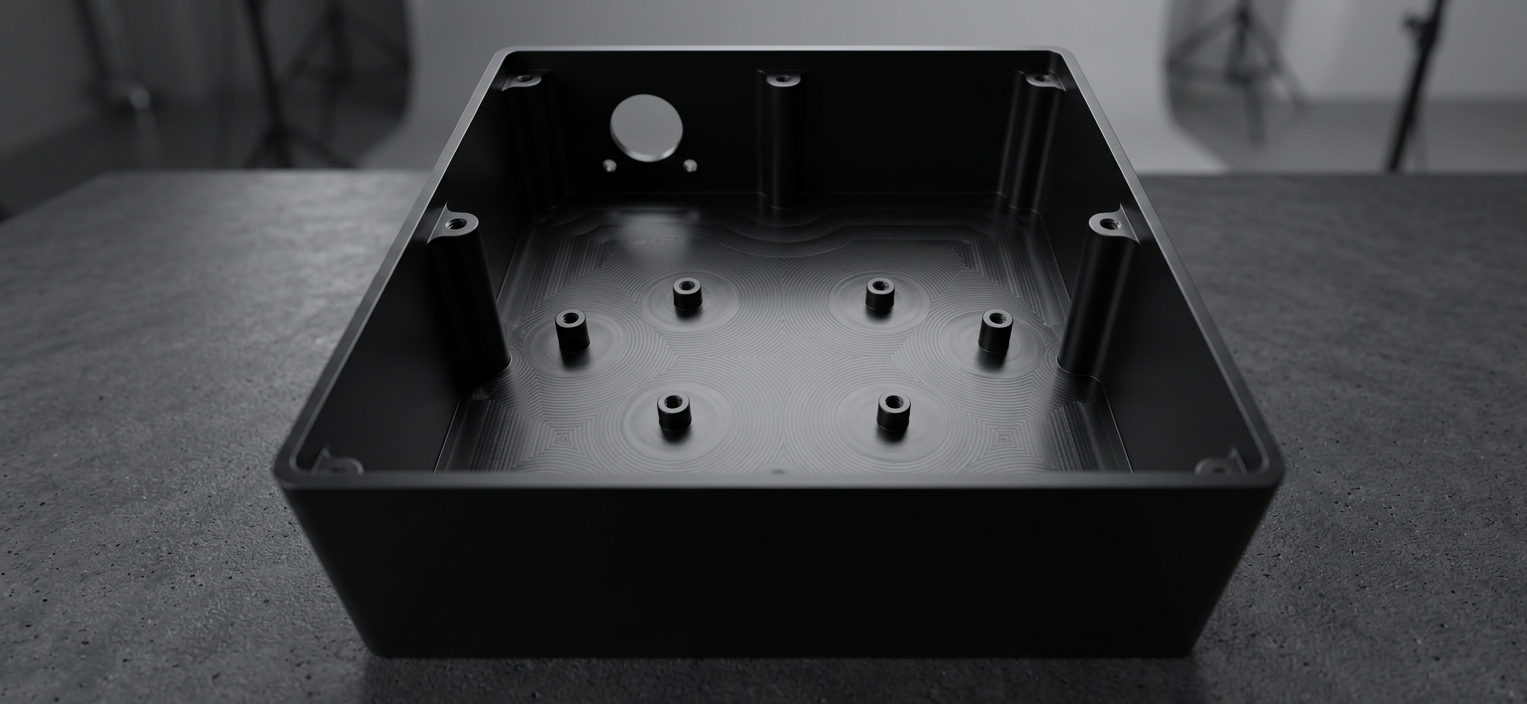
A complete engineer's guide to Type III hard black anodizing of aluminium in Singapore: how the oxide layer forms, hardness and wear data, dimensional growth, masking, alloy choice, and how it compares to Type II and hard chrome.
Hard black anodizing, more formally known as Type III hard coat anodising, is one of the most effective surface treatments available for aluminium components that must survive abrasion, wear, and demanding service conditions. Unlike a paint or a plated layer that sits on top of the metal, anodizing converts the surface of the aluminium itself into a dense aluminium oxide film that is integral to the part. The result is an exceptionally hard, corrosion-resistant, and electrically insulating skin that, when dyed and sealed, delivers a deep, low-reflectance black finish prized by optics, defence, semiconductor, and precision engineering manufacturers. This guide explains how the process works, what it does to your dimensions, which alloys respond best, how to specify it correctly, and how it compares with both standard anodizing and hard chrome plating. It is written for the engineers and buyers in Singapore who need to make confident, accurate decisions about finishing their aluminium parts.
What Is Type III Hard Anodizing?
Anodizing is an electrochemical process that thickens the natural oxide layer on aluminium. The part is made the anode in an acid electrolyte, usually sulphuric acid, and a controlled electric current is passed through the bath. Oxygen liberated at the part surface reacts with the aluminium to grow a layer of aluminium oxide. Anodic coatings are classified by the long-standing specification framework most engineers recognise from MIL-A-8625: Type I uses chromic acid, Type II is conventional sulphuric acid anodizing, and Type III is hard coat, or hard anodizing.
The key difference with Type III is the operating conditions. The bath is chilled to near freezing, typically around 0 to 5 degrees Celsius, and the process runs at higher voltage and current density than decorative anodizing. The cold, energetic conditions slow the chemical dissolution of the oxide while it forms, allowing a much thicker, denser, and harder coating to build. Where a Type II film might be 5 to 25 microns, a Type III hard coat is commonly grown to between 25 and 50 microns, and in some applications considerably more. That density and depth are what give hard anodizing its standout mechanical performance.
Active Treatment offers this process as a dedicated capability. You can read more on our hard black anodizing service page, and our broader aluminium anodizing service covers conventional Type II work for decorative and lighter-duty needs.
How the Oxide Layer Forms
Understanding the structure of the anodic film explains almost everything about how it behaves. As the coating grows, it develops a characteristic two-part architecture. At the very interface with the metal there is a thin, dense barrier layer. Above that, the bulk of the coating forms as a porous layer made up of countless tiny hexagonal cells, each with a central pore running down toward the barrier. This honeycomb of microscopic pores is what makes anodizing so useful: the pores can be filled with dye for colour, then closed by sealing to lock everything in.
A crucial point that surprises many engineers new to the process is that the oxide does not simply pile up on top of the part. The film grows in both directions from the original surface. Roughly half of the total coating thickness forms by conversion into the base metal, and roughly half builds outward beyond the original surface. So for a 50 micron coating, the part surface moves out by about 25 microns while another 25 microns of the original aluminium is consumed and transformed into oxide. This penetration is exactly why anodizing bonds so well and resists chipping, but it is also why dimensional planning matters.
Why Hard Coat Is Denser
The low-temperature operating window is the heart of hard anodizing. In a warmer bath, the acid electrolyte continuously redissolves the freshly formed oxide, widening the pores and softening the film. By chilling the bath and driving the reaction hard, the rate of formation outpaces the rate of dissolution, producing narrower pores, thicker cell walls, and a much harder, more wear-resistant coating. This is the fundamental trade that defines Type III, and it is why hard coat tanks need substantial refrigeration and careful process control.
Thickness Build-Up and Dimensional Growth
Dimensional change is the single most important practical consideration when specifying hard anodizing on precision parts. Because the coating grows partly into and partly out of the surface, the effect on a measured dimension depends on the geometry of the feature.
- External flat surfaces and outside diameters: each surface grows outward by roughly half the total coating thickness. A 50 micron coating typically increases an outside diameter by about 50 microns total, since both sides of the diameter gain material.
- Internal bores and slots: the coating grows inward on every wall, so a hole gets smaller. A 50 micron coating typically reduces a bore diameter by about 50 microns, which can close up close-tolerance fits if not allowed for.
- Threads: coating builds on all flanks, so pitch diameters tighten. Fine threads and small fasteners can become difficult to assemble after a thick hard coat unless they are masked or the thread is cut to allow for growth.
The reliable approach is to design and machine the part with the final, post-anodize dimensions in mind, allowing for growth, and to clearly call out any features that must hold tight tolerances. Where a fit simply cannot tolerate the build-up, that feature can be masked off, or in some cases lightly lapped after coating, although abrasive finishing reduces the protective oxide and should be agreed in advance. Sharing your drawing with critical dimensions flagged lets us plan racking, masking, and target thickness so the finished part lands in tolerance.
Hardness, Wear, and Abrasion Resistance
The reason most engineers reach for hard anodizing is mechanical durability. A well-formed Type III coating on a suitable 6000 series alloy is extremely hard, with surface hardness that can rival or exceed hardened steel in many references, often quoted in the region of 400 to 600 on the Vickers scale and higher on ideal alloys. More relevant than any single number is the real-world behaviour: hard anodized surfaces resist scratching, galling, sliding wear, and abrasive erosion far better than bare or Type II anodized aluminium.
This makes the treatment ideal for components that slide, rotate, index, or are handled repeatedly: pistons and cylinders in pneumatic equipment, guide rails and bushings, valve bodies, rollers, jigs and fixtures, and aluminium tooling that would otherwise wear quickly. Because the coating is part of the metal rather than a separate plated layer, it does not peel or flake under load. It is worth noting that maximum hardness is alloy dependent, and that very thick coatings can develop micro-cracking under flexing or thermal cycling, so the target thickness should match the duty rather than simply being maximised.
Low Reflectance for Optics and Defence
A dyed black hard coat is not only tough, it is also visually and optically functional. A deep, matte black, low-reflectance surface is highly desirable wherever stray light must be controlled or where a component must be visually unobtrusive. That is why hard black anodizing is a default choice for optical assemblies, camera and sensor housings, laser components, and instrumentation, as well as for defence equipment where low visual and infrared signature matters.
The blackness of a hard coat comes from two sources. First, a thick Type III film is integrally dark even without dye, because the dense oxide and the alloying elements drawn into it absorb light; on copper-bearing alloys this can already look bronze to near black. Second, and more controllably, the porous oxide is infused with a black dye before sealing to give a uniform, durable black that is locked into the coating rather than sitting on the surface. Because the colour lives inside the oxide, it will not rub off the way paint can, which is exactly what high-reliability optical and defence applications demand. The same robust, particle-free, low-outgassing nature of a properly sealed coating also suits equipment used in the semiconductor industry.
Sealing the Coating
Straight after anodizing, the oxide is porous and, while hard, is not at its best for corrosion resistance because moisture and contaminants can enter the open pores. Sealing closes those pores. Traditional hot-water or steam sealing hydrates the oxide so it swells and seals the pore mouths, while mid-temperature and cold nickel-based seals achieve similar protection at lower energy. Sealing dramatically improves corrosion resistance and locks in any dye.
There is an engineering trade-off worth knowing: sealing slightly reduces the as-anodized surface hardness and abrasion resistance because hydration softens the very outer skin of the oxide. For parts where maximum corrosion protection is the priority, a full seal is correct. For parts where the absolute highest wear resistance matters and the environment is benign, a lighter or unsealed coating may be specified. Tell us the service environment and we will recommend the right balance of sealing for your part.
Suitable Aluminium Alloys
Not all aluminium responds to hard anodizing the same way, and alloy choice strongly influences hardness, colour, and uniformity. The alloying elements that improve machinability or strength can interfere with the clean growth of the oxide.
- 6061 and 6082 (6000 series): the workhorses for hard anodizing. They contain magnesium and silicon in modest amounts and produce hard, uniform, attractive coatings. These are the safest choices when finish quality and consistency matter.
- 7075 and other 7000 series: high-strength aerospace alloys that hard anodize well but can reach slightly lower peak hardness and a different shade because of zinc and copper content.
- 2024 and 2000 series: high copper content makes anodizing more challenging; coatings tend to be darker, can be less uniform, and may have reduced corrosion resistance unless carefully processed.
- Casting alloys: high-silicon castings such as the common die-cast grades give grey, mottled, and less uniform coatings because silicon does not convert to oxide. They can be hard anodized but cosmetic expectations should be realistic.
If appearance is critical, the most reliable route to a uniform deep black is a 6000 series wrought alloy with a dyed and sealed hard coat. When you enquire, let us know the exact alloy and temper so we can advise on the colour and hardness you can realistically expect.
Masking and Tolerancing
Because anodizing is electrically insulating and changes dimensions, real parts almost always need some areas protected. The anodic oxide is a good electrical insulator, which is an advantage for many designs but a problem at earth points, electrical contacts, and grounding faces that must stay conductive. Likewise, bearing journals, dowel holes, threaded inserts, and mating surfaces often need to keep their bare-metal tolerance.
We use several masking methods depending on the feature: precision tapes and die-cut masks for flat zones, silicone or rubber plugs for holes and threads, stop-off lacquers for irregular shapes, and dedicated fixtures that also serve as electrical contact points during processing. Each contact point leaves a small bare witness mark, so the racking position is chosen to keep those marks on non-critical surfaces. The most effective thing you can do is provide a clear drawing that marks every surface to be masked, every critical dimension, and the location where witness marks are acceptable. That single document removes most of the guesswork and protects your fits.
Type II vs Type III vs Hard Chrome
Choosing the right finish means weighing wear performance, dimensions, weight, conductivity, and the base material. The table below summarises how Type II anodizing, Type III hard anodizing, and hard chrome plating compare on the factors that drive most decisions.
| Property | Type II Anodizing | Type III Hard Anodizing | Hard Chrome Plating |
|---|---|---|---|
| Base material | Aluminium only | Aluminium only | Steel, aluminium, many metals |
| Typical thickness | 5 to 25 microns | 25 to 50+ microns | A few microns to many hundreds |
| Relative hardness | Moderate | Very high | Very high |
| Wear resistance | Fair | Excellent | Excellent |
| Electrical behaviour | Insulating | Insulating | Conductive |
| Dimensional change | Small, grows in and out | Moderate, grows in and out | Adds thickness, can be reground |
| Best for | Decorative, mild duty | Wear parts, optics, tooling | Heavy load shafts and rods |
The headline is simple. If your part is aluminium and you want a tough, lightweight, electrically insulating, integrally bonded wear surface, Type III hard anodizing is usually the answer. If your part is steel, or you need a thick build that can be ground back to a precise size, or a conductive surface, then hard chrome is the better tool. Active Treatment offers both, so the recommendation is driven by your part rather than by what is in the tank. You can explore our hard chrome plating service and read the dedicated hard chrome plating guide for a deeper comparison, and our flash chrome plating covers thinner decorative and corrosion duty.
When to Choose Each
Reach for Type II when the part is mostly cosmetic, needs colour, and will not see heavy abrasion. Reach for Type III when the aluminium part slides, rotates, indexes, or is handled hard, or when you need that deep functional black for optical and defence work. Reach for hard chrome when the substrate is steel, when wear loads are very high, or when a worn surface needs to be rebuilt and machined back to size. For corrosion-led problems on non-aluminium parts, alternatives such as electroless nickel plating may be more appropriate than any anodizing process.
Applications and Industries
Hard black anodizing shows up across a wide range of high-value sectors in Singapore and the region. In optics and instrumentation it controls stray light and protects housings. In defence it provides durable low-reflectance surfaces on equipment that must perform in the field. In semiconductor and electronics manufacturing it gives clean, hard, insulating surfaces on tooling, jigs, and chamber-adjacent hardware. In automation and precision engineering it extends the life of guides, cams, pistons, manifolds, and fixtures.
The lightweight nature of aluminium combined with a steel-rivalling wear surface is the recurring theme: designers get the mass savings of aluminium without sacrificing durability. For an overview of how finishing choices fit into building reliable precision components, see our pillar article on surface treatment for precision engineering parts in Singapore, and the focused guide on surface treatment for the semiconductor industry. We also support broader manufacturing needs across the region.
How to Specify and What to Send a Finisher
Getting a great result from hard anodizing is largely about giving the finisher the right information up front. A clear specification removes ambiguity and prevents rework. When you request a quote, the most useful details to include are listed below.
- Alloy and temper: for example 6061-T6. This drives expected hardness and colour.
- Target coating thickness: state the total thickness required, or the functional requirement so we can recommend it.
- Colour: confirm dyed black versus natural hard coat, and any cosmetic expectations.
- Critical dimensions and tolerances: flag every feature that must hold size after coating so growth can be allowed for.
- Areas to mask: threads, bores, earth points, contact faces, and any surface that must stay bare or conductive.
- Sealing requirement: tell us the service environment so we can balance corrosion protection against maximum hardness.
- Acceptable witness mark locations: where racking contact marks may sit without affecting function.
- Quantity, batch size, and any relevant standard or drawing reference.
A dimensioned drawing that captures these points is far more valuable than a written description alone. It lets us plan racking, masking, and target thickness in one pass and quote accurately the first time.
Quality and Inspection
A reliable hard anodizing result depends on disciplined process control and verification. Pre-treatment is critical: parts are cleaned, etched as appropriate, and desmutted so the surface is uniformly active before anodizing. Bath temperature, current density, and time are controlled to grow a consistent, dense film, because the cold operating window that defines Type III is unforgiving of drift.
After processing, coating thickness is the primary measured property and can be checked non-destructively with eddy-current gauges and, where required, verified by cross-section microscopy. Coating quality is also assessed for uniformity, colour consistency, adhesion, and freedom from burning or powdery deposits. For corrosion-critical parts, sealing quality matters and can be evaluated by recognised seal-quality tests, with salt-spray exposure used where a standard calls for it. Throughout, the racking and masking are inspected so that bare areas, witness marks, and critical fits are exactly where the drawing intends. This attention to detail is what separates a coating that merely looks black from one that performs reliably in service.
Conclusion
Type III hard black anodizing turns ordinary aluminium into a hard-wearing, corrosion-resistant, low-reflectance component without adding the weight of a plated steel part. Its strengths come from the dense, deep oxide grown in a cold, energetic bath: outstanding hardness and wear resistance, an integrally bonded surface that will not peel, electrical insulation, and a deep functional black that suits optics, defence, semiconductor, and precision engineering work. The same physics that makes it tough also means it grows into and out of the surface, so success depends on planning dimensions, choosing the right alloy, masking the right features, and sealing for the right environment.
Frequently Asked Questions
What is the difference between Type II and Type III anodizing?
Type II is conventional sulphuric acid anodizing that builds a thinner, more decorative oxide, typically up to about 25 microns. Type III, or hard coat anodizing, is run at lower temperatures and higher current densities to grow a much denser, harder oxide, generally 25 to 50 microns or more, giving far better wear and abrasion resistance for engineering parts.
How thick is hard black anodizing and how much will my part grow?
Type III coatings are usually specified between 25 and 50 microns total thickness. Roughly half the layer grows outward and half forms into the base metal, so a 50 micron coating typically adds about 25 microns per surface to outside dimensions. On a closed feature like a bore this stack-up effectively doubles, so always share critical tolerances before processing.
Which aluminium alloys are best for Type III hard anodizing?
Wrought alloys in the 6000 series, especially 6061 and 6082, anodize cleanly and produce hard, uniform coatings. The 7075 and 2024 alloys can be hard anodized but high copper or zinc content can reduce maximum hardness and shift colour. High-silicon and high-copper casting alloys are more difficult and tend to give darker, less uniform finishes.
Why is hard anodizing naturally dark or black?
A thick Type III oxide is integrally coloured. The dense, deep oxide structure and the alloying elements drawn into it make untinted hard coat appear grey to bronze or near black, especially on copper-bearing alloys. A true uniform black is achieved by infusing black dye into the porous oxide before sealing, giving a low-reflectance, durable finish.
Is hard anodizing or hard chrome better for wear resistance?
Both give excellent wear resistance but suit different parts. Hard anodizing only works on aluminium, is lightweight, electrically insulating and grows minimally, making it ideal for aluminium tooling and optics. Hard chrome is plated onto steel and other metals, can be built thicker and reground, and is preferred for heavy load-bearing shafts and hydraulic rods.
Can I keep some areas free of anodizing on my part?
Yes. Threaded holes, bearing fits, earth points and electrical contacts are commonly masked so they stay bare. We use masking tapes, plugs, lacquers and custom fixtures to protect selected features. Tell us which surfaces must remain conductive or dimensionally untouched, and mark them clearly on your drawing so masking can be planned correctly.
Need Help Choosing the Right Surface Treatment?
Not sure which surface treatment your spare parts need?
Active Treatment Pte Ltd has more than 15 years of experience helping manufacturers, precision engineering firms, semiconductor companies, medical device suppliers and industrial businesses improve corrosion resistance, wear resistance and component lifespan.
Whether you require anodizing, electroless nickel plating, zinc plating, hard chrome plating, electropolishing or another industrial surface treatment, our Singapore engineering team can review your specifications and recommend the most suitable process.
Send your drawings, part specifications or project requirements for a technical consultation.
Email activetreatment88@yahoo.com.sg or phone +65 6352 9846.
Request Technical Consultation · Request Quotation · View Surface Treatment Services
Recommended Services
- Hard Black Anodizing — Military-grade Type III hard anodizing producing an exceptionally dense, wear-resistant oxide layer ideal for high-stress aerospace, defence, and semiconductor components.
- Aluminium Anodizing — Electrochemical process that converts the metal surface into a decorative, durable, corrosion-resistant anodic oxide finish. Available in a wide spectrum of colours.
- Hard Chrome Plating — Thick industrial hard chrome (5–500+ µm, HV 900–1100) for wear resistance, low friction, and dimensional restoration of hydraulic cylinders, piston rods, and tooling.
- Electroless Nickel Plating — Auto-catalytic nickel-phosphorus plating delivering perfectly uniform thickness on complex geometries, blind holes and threads — with medium- and high-phosphorus grades for hardness or 1,000+ hours of corrosion resistance.