Hard Chrome Plating in Singapore: Wear Resistance & Dimensional Restoration
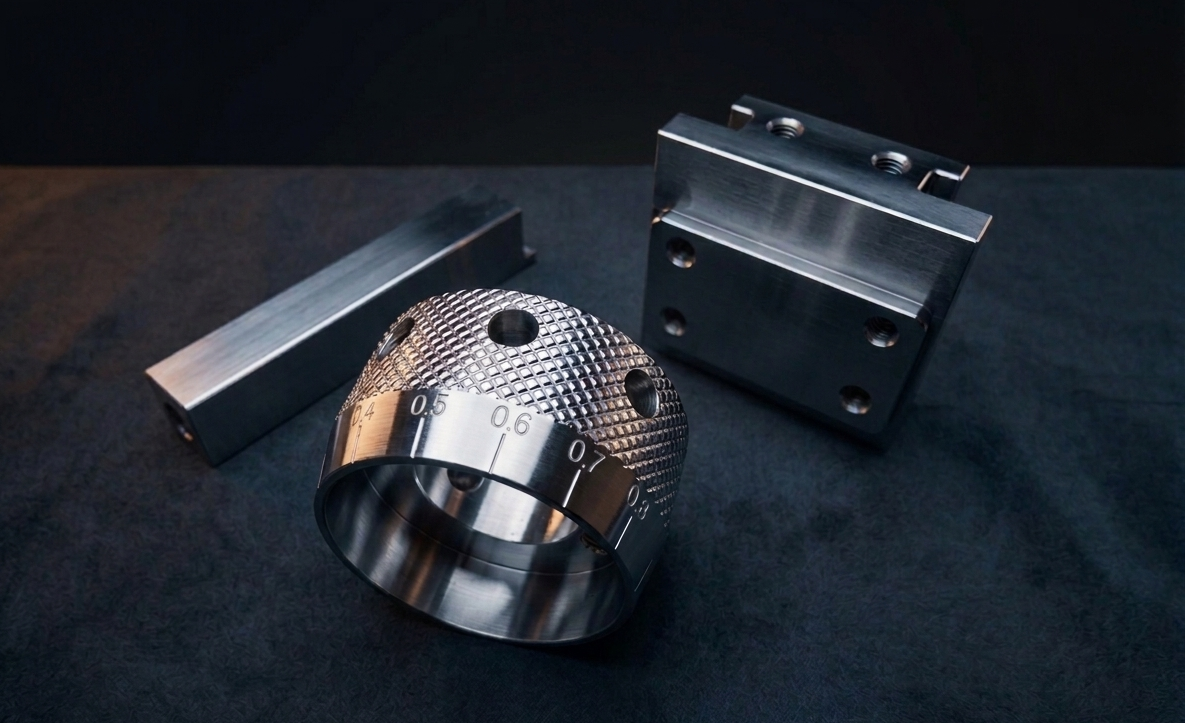
A practical engineer's guide to hard chrome plating in Singapore: how it delivers extreme hardness, low friction and wear resistance, and how it restores worn shafts, hydraulic rods and moulds to size.
Hard chrome plating, also known as industrial or engineering chrome, is one of the most reliable surface engineering processes for components that must resist wear, abrasion and friction while holding tight dimensional tolerances. Unlike the bright decorative chrome seen on trim and fittings, hard chrome is a functional coating valued for its exceptional hardness, low coefficient of friction and the unique ability to rebuild worn parts back to their original dimensions. For manufacturers, equipment operators and precision engineering firms in Singapore, it is a workhorse process that extends the service life of expensive components and keeps machinery running. This guide explains how hard chrome works, where it excels, how to specify it correctly, and how it compares to alternative wear coatings such as electroless nickel and hard anodizing.
What Hard Chrome Plating Is
Hard chrome plating is the electrodeposition of a relatively thick layer of chromium directly onto a base metal, most commonly steel, but also stainless steel, cast iron, copper alloys and aluminium. The deposit is applied from a chromium electrolyte using direct current, with the part acting as the cathode. The result is a dense, metallurgically bonded chromium layer that is extremely hard and chemically stable.
The key distinction from flash chrome plating and bright decorative chrome is purpose and thickness. Decorative finishes are typically less than a micron thick and are deposited over a nickel underlayer purely for appearance and mild corrosion protection. Hard chrome is applied directly to the substrate in much thicker deposits to perform a mechanical job. Because it is deposited without a nickel underlayer and at greater thickness, hard chrome behaves as a true engineering coating rather than a cosmetic one. You can learn more about the full family of finishes on our chrome plating service page.
How the Process Works
The performance of a hard chrome deposit is determined as much by preparation as by plating. A typical workflow runs through several controlled stages, each of which influences adhesion, finish and dimensional accuracy.
Surface Preparation
Parts are first cleaned to remove oils, oxides and contamination. Mechanical preparation such as grinding or light blasting may be used to establish a uniform, sound surface. Worn or damaged parts that are being restored are often ground undersize first to remove fatigue-affected or scored material before plating begins. Proper masking is applied so that only the intended areas receive chromium, protecting threads, bores and reference surfaces.
Activation and Plating
Immediately before plating, the surface is electrochemically activated to ensure a strong metallurgical bond. The part is then immersed in the chromium electrolyte and plated under carefully controlled current density, temperature and time. These parameters govern deposit hardness, crack structure and the rate of build-up. Skilled operators use anode positioning, conforming anodes and current adjustment to manage how evenly chromium deposits across complex geometries, because chromium has relatively poor throwing power and tends to build faster on edges and high points.
Post-Plating Operations
After plating, high-strength steel components are usually baked for hydrogen embrittlement relief. Most precision parts are then ground and, where required, superfinished or polished to achieve the final diameter, roundness, straightness and surface roughness. Because the as-plated surface is slightly oversize and nodular, the grinding allowance is built into the plating thickness so the finished part lands exactly on tolerance.
Key Properties and Benefits
Hard chrome earns its place in demanding applications through a combination of mechanical and tribological properties that few coatings match at comparable cost.
- High hardness: As-plated hard chrome is typically in the region of 800 to 1000 HV, giving excellent resistance to abrasive and adhesive wear.
- Low friction: Chromium has a low coefficient of friction against many counter-surfaces, and the micro-crack network can retain lubricant, which reduces galling and stick-slip in sliding contacts.
- Wear and abrasion resistance: The hard, dense surface resists scoring, scratching and erosion, prolonging the life of moving parts.
- Dimensional restoration: Chromium can be built up to rebuild worn dimensions, then ground back to size, allowing expensive components to be repaired rather than replaced.
- Chemical stability: Chromium is naturally passive and resists many corrosive media and oxidation, though the micro-crack structure limits its standalone corrosion protection in aggressive environments.
- Good release behaviour: The low-friction, smooth surface helps moulds and tooling release products cleanly and resist sticking.
Understanding Micro-Cracking and Stress
One of the defining characteristics of functional hard chrome is its micro-crack network. As the deposit grows, internal tensile stress builds up and is relieved through the formation of a fine, dense pattern of micro-cracks. This is generally a desirable feature: the cracks help retain oil films on sliding surfaces and break up the deposit into small, stable domains that resist spalling.
The trade-off is corrosion behaviour. Because cracks can extend down to the substrate, moisture and corrosive species can in principle reach the base metal through the deposit. For parts exposed to aggressive or marine environments, engineers may specify thicker deposits, duplex systems with an underlying corrosion-resistant layer, or an alternative coating altogether. Understanding this behaviour is central to specifying hard chrome correctly rather than assuming it is a universal corrosion barrier.
Dimensional Restoration and Build-Up
Perhaps the most valuable industrial use of hard chrome is salvaging and restoring worn components. Rotating and reciprocating parts inevitably lose material over time through wear, scoring, corrosion or accidental damage. Rather than scrapping a costly shaft or cylinder, manufacturers can have it restored to its original specification.
The restoration sequence typically involves grinding the worn part undersize to remove damaged material and establish a clean cylindrical reference, plating chromium back on to a controlled oversize, and then finish grinding to the exact original dimension. This approach is widely used for:
- Hydraulic and pneumatic cylinder rods and pistons
- Drive shafts, spindles and bearing journals
- Rolls and rollers for printing, packaging and material handling
- Injection and compression mould cavities and cores
- Pump components, valve parts and wear rings
Because restoration restores both the dimension and the wear-resistant surface in a single process, it is often faster and far more economical than manufacturing a replacement, particularly for large or long-lead-time components. This makes hard chrome a key tool for maintenance, repair and overhaul programmes across the manufacturing sector.
Thickness Ranges and Finishing
Hard chrome thickness is selected to suit the function of the part. The figures below are typical industry ranges and should always be confirmed against the specific application and drawing requirements.
- Thin functional deposits (around 5 to 25 microns): Used where the goal is primarily a hard, low-friction running surface on a part already at size, such as many shafts and rods.
- Standard wear deposits (around 25 to 50 microns): Common for general wear duty and longer service intervals.
- Heavy build-up (around 100 to 500 microns or more): Used for dimensional restoration, where substantial material must be replaced before grinding back.
Surface finish is equally important. As-plated chrome has a slightly rough, nodular topography, so most precision parts are ground to a smooth finish. Sliding and sealing surfaces such as hydraulic rods are frequently superfinished or polished to a very low roughness to protect seals and reduce friction. For parts that need a uniform matte texture before plating or finishing, processes such as sand blasting can be used during preparation. Defining the required surface roughness on the drawing is essential because it dictates the finishing operations and the cost.
Material and Specification Considerations
Hard chrome can be applied to a wide range of substrates, but each brings its own considerations that should be discussed with your finisher before plating.
High-Strength Steel and Hydrogen Embrittlement
High-strength steels are susceptible to hydrogen embrittlement, a phenomenon in which absorbed hydrogen causes delayed, brittle cracking under sustained load. Any process that exposes such steels to hydrogen, including electroplating, carries this risk. The standard mitigation is a post-plating bake, commonly carried out at around 190 to 230 degrees Celsius for several hours, performed soon after plating to drive out diffusible hydrogen. Parts above roughly 1000 MPa tensile strength, and especially highly stressed fasteners, springs and shafts, should always be specified with embrittlement relief baking.
Substrate Hardness and Load Support
A hard coating performs best when supported by a substrate that does not deform under load. If the base metal is too soft, point loads can push the hard but thin chrome layer into the substrate and cause cracking or flaking, sometimes described as the eggshell effect. For heavily loaded parts, the substrate may need to be hardened or the chrome thickness increased so the coating is properly supported.
Geometry and Masking
Because chromium builds preferentially on edges and protrusions and plates poorly into recesses and bores, part geometry strongly affects deposit uniformity. Sharp edges may need radii, and deep features may require conforming or internal anodes. Clear definition of which surfaces must be plated, and which must be masked, prevents unwanted build-up on threads, datums and bearing fits.
Applications and Industries
Hard chrome appears across virtually every industry that relies on moving metal parts. In the automotive sector it is used on shock absorber and damper rods, piston rings, valve components and tooling. In general industrial equipment it protects hydraulic rods, cylinders, pumps, rolls and linear motion components. Tool and mould makers specify hard chrome on injection mould surfaces, dies and forming tools to improve wear life and release.
The dimensional restoration capability is especially valuable in heavy industry, marine and equipment overhaul, where large shafts and rods can be repeatedly repaired over a long service life. Precision engineering firms also use hard chrome to combine a hard running surface with the ability to fine-tune a critical dimension. Across these applications the common thread is the need for a durable, low-friction surface that can take repeated contact, sliding or impact without rapid wear.
Hard Chrome vs Electroless Nickel vs Hard Anodizing
Choosing the right wear coating depends on the substrate, the type of wear, the corrosion environment and the dimensional requirements. The table below summarises how hard chrome compares with two of the most common alternatives. All values are typical industry ranges and should be confirmed for your specific parts.
| Property | Hard Chrome Plating | Electroless Nickel | Hard Anodizing |
|---|---|---|---|
| Typical substrates | Steel, stainless, cast iron, copper alloys | Steel, stainless, aluminium, copper alloys | Aluminium alloys only |
| Typical hardness | Around 800 to 1000 HV | Around 500 to 700 HV, higher after heat treatment | Around 400 to 600 HV |
| Thickness uniformity | Uneven on complex shapes, builds on edges | Very uniform, follows geometry closely | Uniform, grows partly into the metal |
| Dimensional build-up | Excellent, ideal for restoration | Good, predictable thickness | Limited, part of layer consumes base metal |
| Corrosion resistance | Moderate alone due to micro-cracks | Good to excellent, depends on phosphorus content | Good, especially when sealed |
| Best suited to | Heavy wear, sliding, rebuilding worn parts | Complex shapes, bores, corrosion plus wear | Lightweight aluminium wear parts |
In short, hard chrome leads on hardness, heavy sliding wear and the ability to rebuild worn dimensions. Electroless nickel is the preferred choice when uniform coverage of complex geometries, internal bores and threads is essential, or when corrosion resistance must be combined with moderate wear performance. Hard anodizing is the natural option for aluminium parts where light weight is important, but it cannot be applied to steel. Often the decision comes down to the substrate first, then the balance between wear and corrosion. Our guide to electroless nickel plating covers that process in more depth.
Hard Chrome vs Flash and Decorative Chrome
It is easy to confuse the various chrome processes because they share a name, but they serve very different roles. Decorative and flash chrome are thin, bright finishes applied over a nickel layer to give an attractive, reflective appearance and modest corrosion protection. They are measured in fractions of a micron and are not intended to carry mechanical load or resist heavy wear.
Hard chrome, by contrast, is applied directly to the substrate at far greater thickness for purely functional reasons. It is generally not as bright as decorative chrome and is usually ground rather than left in its as-plated state. If your requirement is appearance, a thin protective layer or quick refurbishment of a cosmetic surface, flash chrome plating is the right route. If the requirement is hardness, wear life or restoring a worn dimension, hard chrome is the engineering answer. A clear understanding of this distinction at the design stage prevents costly specification errors.
How to Specify Hard Chrome and What to Send a Finisher
The quality and cost of a hard chrome job depend heavily on how clearly it is specified. To get an accurate quotation and the right result, provide as much of the following as possible:
- Base material: The exact alloy and its condition, including any heat treatment and approximate tensile strength, so embrittlement relief can be planned.
- Surfaces to be plated: A drawing clearly indicating which areas require chrome and which must be masked, including threads, bores and datums.
- Thickness or final dimension: Either the required deposit thickness, or the finished diameter and tolerance if the part is to be ground to size.
- Surface finish: The required roughness for sliding, sealing or running surfaces, and whether grinding or superfinishing is needed.
- Functional requirements: The application, type of wear, operating environment and any relevant specification or standard to be met.
- Quantity and condition: Whether parts are new or being restored, and the current state of any worn surfaces.
For restoration work it also helps to share the original drawing dimensions and the extent of wear or damage, so the finisher can plan how much material to grind off and rebuild. Early dialogue with your plating partner almost always produces a better, more economical outcome than sending parts with incomplete information.
Quality, Inspection and Process Control
Reliable hard chrome depends on disciplined process control and verification. Adhesion is fundamental: a poorly prepared surface can lead to flaking or blistering under load, so surface preparation and activation are tightly controlled. Thickness is verified using calibrated measurement methods appropriate to the part, and critical dimensions are confirmed after grinding using precision metrology.
Visual inspection checks for defects such as pits, nodules, burning or unplated areas. Where corrosion performance is important, the crack structure and the need for a duplex system are considered during specification rather than after the fact. For high-strength steels, embrittlement relief baking is documented as part of the process record. Consistent bath chemistry, current control and temperature management underpin all of this, ensuring repeatable hardness and deposit structure from part to part. A finisher with broad capability can also advise when a complementary process, such as electroless nickel or another surface treatment, would serve the application better.
Choosing the Right Finisher in Singapore
Hard chrome rewards experience. The combination of careful masking, current management on awkward geometries, controlled build-up for restoration, precision grinding and proper embrittlement relief is what separates a long-lasting result from a premature failure. Working with an established surface treatment specialist who handles the full chain, from preparation through plating to finishing, reduces handling, shortens lead times and keeps accountability in one place.
Active Treatment has provided metal finishing and surface treatment services in Singapore since 2010, supporting precision engineering, manufacturing, automotive and equipment maintenance customers. Whether you need a hard, low-friction running surface on new components or the restoration of worn shafts, rods, rolls and moulds back to specification, our team can advise on the right process, thickness and finish for your parts. To explore the full process, visit our hard chrome plating page, or read our broader guide to surface treatment for precision engineering parts.
Conclusion and Next Steps
Hard chrome plating remains one of the most effective and economical ways to give metal components a hard, low-friction, wear-resistant surface, and it is almost unmatched for rebuilding worn parts back to their original dimensions. By understanding its hardness and micro-crack behaviour, planning for hydrogen embrittlement relief on high-strength steel, specifying thickness and finish clearly, and comparing it honestly against electroless nickel and hard anodizing, engineers can apply it with confidence and avoid common pitfalls. The result is longer component life, fewer replacements and more reliable machinery.
Frequently Asked Questions
What is the difference between hard chrome and decorative or flash chrome?
Hard chrome is an engineering coating applied in thicker deposits, generally from a few microns up to hundreds of microns, to provide hardness, wear resistance and dimensional build-up. Flash and decorative chrome are very thin layers, usually under one micron, applied over nickel mainly for appearance and corrosion protection rather than for load-bearing wear duty.
How thick can hard chrome be plated?
Typical functional deposits range from about 5 to 50 microns for wear surfaces, while dimensional restoration of worn parts can build up considerably more, often 100 to 500 microns or more before grinding back to size. The achievable thickness depends on part geometry, current distribution and how much grind stock is required for the final tolerance.
Does hard chrome plating need grinding after plating?
Most precision applications are ground or superfinished after plating. As-plated chrome has a nodular surface and the deposit is slightly thicker than the final target so the part can be ground to exact diameter, roundness and surface finish. For some lightly loaded parts an as-plated or lightly polished finish may be acceptable.
Why is hydrogen embrittlement relief important for high-strength steel?
Electroplating can introduce hydrogen into high-strength steel, which may cause delayed cracking under load. Parts above roughly 1000 MPa tensile strength are usually baked soon after plating, commonly at around 190 to 230 degrees Celsius for several hours, to drive out diffusible hydrogen and reduce the risk of embrittlement failure.
What is the micro-crack network in hard chrome and why does it matter?
Functional hard chrome typically forms a fine network of micro-cracks as the deposit grows. This relieves internal stress and helps retain lubricant on sliding surfaces. However, because the cracks can reach the substrate, hard chrome alone is not a complete corrosion barrier in aggressive environments, so duplex systems or alternative coatings may be specified.
Can worn hydraulic rods and shafts be re-chromed instead of replaced?
Yes. Worn or scored rods, shafts and cylinders can often be stripped, repaired, re-plated with hard chrome and ground back to the original specification. This is usually faster and more economical than manufacturing a new component, and it is a common reason manufacturers and equipment operators specify hard chrome for maintenance.
Need Help Choosing the Right Surface Treatment?
Not sure which surface treatment your spare parts need?
Active Treatment Pte Ltd has more than 15 years of experience helping manufacturers, precision engineering firms, semiconductor companies, medical device suppliers and industrial businesses improve corrosion resistance, wear resistance and component lifespan.
Whether you require anodizing, electroless nickel plating, zinc plating, hard chrome plating, electropolishing or another industrial surface treatment, our Singapore engineering team can review your specifications and recommend the most suitable process.
Send your drawings, part specifications or project requirements for a technical consultation.
Email activetreatment88@yahoo.com.sg or phone +65 6352 9846.
Request Technical Consultation · Request Quotation · View Surface Treatment Services
Recommended Services
- Hard Chrome Plating — Thick industrial hard chrome (5–500+ µm, HV 900–1100) for wear resistance, low friction, and dimensional restoration of hydraulic cylinders, piston rods, and tooling.
- Flash Chrome Plating — Thin, bright decorative chrome plating (0.1–0.5 µm) delivering a corrosion-resistant cosmetic finish for trim, fittings, and consumer components — fast turnaround in Singapore.
- Chrome Plating — Singapore chrome plating specialists offering both decorative flash chrome and industrial hard chrome. Explore our dedicated flash and hard chrome services for the right finish.
- Electroless Nickel Plating — Auto-catalytic nickel-phosphorus plating delivering perfectly uniform thickness on complex geometries, blind holes and threads — with medium- and high-phosphorus grades for hardness or 1,000+ hours of corrosion resistance.