Surface Treatment for Precision Manufacturing in Singapore
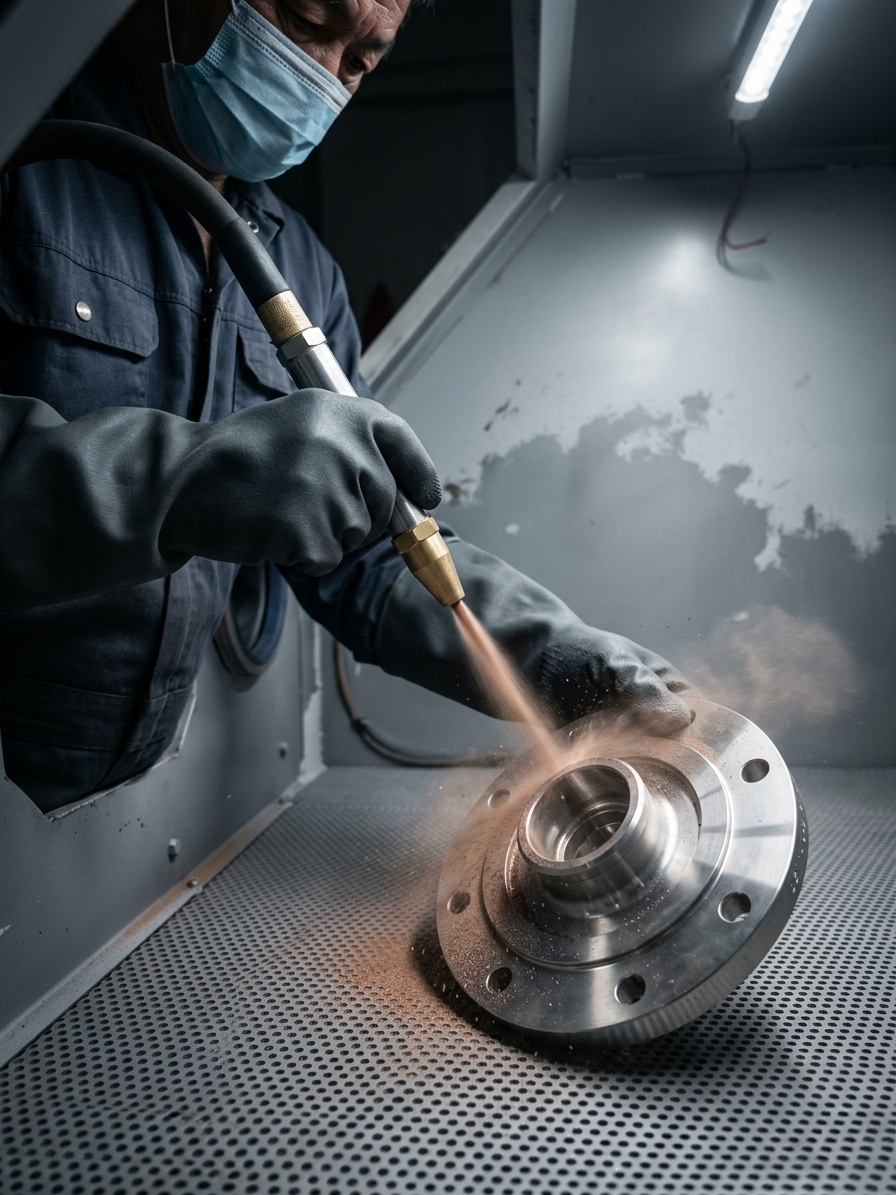
How surface treatment fits into Singapore's precision manufacturing supply chain — choosing functional, cosmetic, and protective finishes, managing tolerances and masking, and partnering with a local finisher for consistent batches.
In Singapore's precision manufacturing ecosystem — contract machining houses, electronics manufacturing services, medical-device makers, semiconductor equipment builders, and aerospace subcontractors — surface treatment is rarely the headline operation. It is the quiet step near the end of the line that determines whether a part resists corrosion in the field, slides without galling, holds an electrical contact, or simply looks finished. Get it right and nobody notices. Get it wrong and an otherwise perfect machined component is scrapped, reworked, or returned. This guide explains how metal finishing fits into the precision manufacturing supply chain, how to choose between functional, cosmetic, and protective finishes, and how to manage tolerances, masking, lead times, and batch consistency when working with a local finisher.
Where surface treatment sits in the supply chain
Precision parts pass through a predictable sequence: raw material, machining or forming, deburring and cleaning, surface treatment, final inspection, and packing or assembly. Finishing sits deliberately near the end because almost every coating or conversion layer is applied to a finished geometry. That position has a consequence many programmes underestimate — anything that goes wrong at the finishing stage lands on the critical path with little time left to recover. A batch that fails salt-spray testing or comes back with cosmetic rejects at this point can blow a ship date that machining hit comfortably.
For contract manufacturers and EMS providers in Singapore, the practical takeaway is to treat surface treatment as a planned, scheduled operation rather than a last-minute errand. That means engaging the finisher early, agreeing the specification before parts are cut, and building realistic finishing lead time into the master schedule. The finishers who add the most value behave less like a transactional vendor and more like a process partner who reviews drawings, flags issues, and runs first articles before committing a production lot.
Why the finisher should see the drawing early
Many finishing problems are designed in, not introduced on the plating line. Blind holes that trap chemistry, sharp internal corners that plate unevenly, alloys that anodize cloudy, sealing faces that should have been masked, and thickness call-outs that the geometry cannot tolerate are all catchable during a drawing review. A short conversation before the first part is machined is far cheaper than a rejected batch. This is exactly the design-for-finishing discipline outlined in our guide to surface treatment for precision engineering parts.
Functional, cosmetic, and protective: defining what the finish must do
The single most useful question to answer before selecting any process is: what is this finish actually for? Most requirements fall into three overlapping categories, and the right choice depends on which one dominates.
- Functional finishes change how a surface behaves mechanically or electrically — hardness and wear resistance, low friction, solderability, electrical conductivity or insulation, lubricity, or controlled surface roughness. Hard anodizing, hard chrome, and electroless nickel are classic functional finishes.
- Protective finishes exist to stop corrosion. In Singapore's hot, humid, often coastal environment this is a constant concern. Zinc plating, zinc-nickel, electroless nickel, anodizing, and passivation all serve here, each with a different mechanism and service life.
- Cosmetic finishes deliver a specific appearance — a uniform matte texture, a bright decorative tone, a black surface, or a defined colour. Bead-blasted aluminium, black anodizing, and hairline-buffed stainless all sell on looks as much as performance.
Real parts usually need two or three of these at once. A consumer-device housing might need corrosion protection, a precise matte appearance, and an electrically conductive masked area for grounding. Ranking the requirements — what is essential, what is desirable, what is merely nice to have — keeps the specification honest and the cost under control.
Matching the goal to a process
Once the dominant requirement is clear, the field of candidate processes narrows quickly. The table below maps common precision-manufacturing goals to a recommended starting point. Treat it as a guide for conversation, not a substitute for engineering review, because base material and service environment always influence the final choice.
| Primary goal | Typical base material | Recommended process | Why it fits |
|---|---|---|---|
| Maximum corrosion protection on steel | Carbon and alloy steel | Electroless nickel or zinc plating | Electroless nickel gives a hard, uniform barrier; zinc gives sacrificial protection at lower cost |
| Hard, wear-resistant surface | Aluminium | Hard anodizing | Integral oxide layer with high hardness and abrasion resistance |
| Lightweight, corrosion-resistant, decorative | Aluminium | Aluminium anodizing (Type II) | Thin integral oxide that accepts dye and protects without much dimensional change |
| Clean, passive stainless steel | Stainless steel | Passivation | Removes free iron and restores the chromium-oxide layer |
| Ultra-smooth, low-contamination surface | Stainless steel | Electropolishing | Removes a thin surface layer to leave a bright, easy-to-clean finish |
| Uniform matte texture and surface prep | Most metals | Sand blasting | Cleans, profiles, and standardises appearance before further finishing |
| Hard, low-friction wear surface on steel | Steel | Hard chrome plating | Very high hardness with a low coefficient of friction for sliding parts |
Surface preparation: where finish quality is won or lost
No coating performs better than the surface beneath it. Adhesion failures, blistering, uneven colour, and patchy corrosion resistance usually trace back to inadequate preparation rather than the plating chemistry itself. Preparation removes oils, oxides, scale, and machining residues, and it establishes a consistent surface profile so the finish adheres uniformly and looks the same from part to part.
The role of sand blasting
Sand blasting, or abrasive blasting more generally, is one of the most versatile preparation steps in a precision shop's toolkit. By propelling a controlled abrasive media at the surface, it strips contaminants, removes light scale and oxidation, and produces a uniform matte texture. That texture does two jobs at once: it increases the effective surface area for better mechanical keying of subsequent coatings, and it visually standardises parts that may have arrived from different machining batches with slightly different surface conditions. The choice of media and pressure controls the result — fine media gives a smooth satin appearance, coarser media gives a deeper profile for heavy coatings.
It is important to be clear about what blasting does and does not do. Blasting is a preparation and cosmetic step, not a corrosion barrier. A blasted steel part left untreated will rust quickly in Singapore's humidity. Blasting is therefore almost always followed by a protective process such as plating, anodizing, or passivation, or by a cosmetic finish that is itself protective.
Other preparation routes
Depending on the base material and the target finish, preparation may also include alkaline degreasing, acid pickling to remove oxides, mechanical polishing or hairline buffing for a directional grain, and thorough rinsing. For stainless steel destined for high-purity applications, electropolishing can serve as both a preparation and a finishing step, removing a thin layer of metal to leave a microscopically smooth, easy-to-clean surface. The right preparation sequence depends entirely on the part, which is why it should be agreed with the finisher rather than assumed.
Tolerances and dimensional change
Precision manufacturing lives and dies by tolerances, and surface treatment changes dimensions. Ignoring this is one of the most common and costly mistakes in the finishing supply chain. Different processes affect size in different directions and by different amounts.
- Electroplating and electroless plating add material. A coating builds outward, so an outside diameter grows by roughly twice the coating thickness and a bore shrinks by about twice the thickness. Electroless nickel is prized here because it deposits very uniformly, even into recesses and on complex geometries, making the dimensional change predictable.
- Anodizing both penetrates and builds. Roughly half the oxide thickness grows outward and half converts existing metal, so the net dimensional growth is about half the total oxide thickness. Hard anodizing, being thicker, demands more attention than thin decorative anodizing.
- Electropolishing and etching remove material. These reduce dimensions slightly and improve surface finish, which must be accounted for when the part is machined.
The practical rule is simple: state the finish and its thickness on the drawing so the machinist can apply the correct pre-plate offsets. A tight bearing bore that must hold its size after plating should be dimensioned with the coating allowance built in, or masked off entirely if the finish is not required there. When tolerances are very tight, discuss them with the finisher early — some processes hold microns comfortably while others need generous bands.
Masking: protecting the surfaces that must stay bare
Many precision parts need finish on some surfaces but absolutely not on others. Threaded holes that must accept a fastener at the correct fit, bearing journals, electrical grounding points, sealing faces, datum surfaces used for inspection, and press-fit features often need to remain bare metal. Masking is the controlled application of tapes, plugs, caps, lacquers, or custom fixtures that keep the finish away from these areas.
Masking is precise, manual, and therefore a real cost driver. Over-specifying it — masking areas that do not actually need protection — quietly inflates the price of every part in the run. Under-specifying it leads to rework or scrap when a coated thread will not accept its fastener. The disciplined approach is to mark exactly which surfaces must stay bare on the drawing, with a short note explaining why, so the finisher can choose the most efficient masking method and the engineer can sanity-check each requirement. For high-volume work, investing in reusable masking fixtures can dramatically reduce per-part cost and improve repeatability.
Batch consistency: making part 10,000 look like part 1
In contract and EMS work, a finish that looks great on the prototype but drifts across production batches is a serious problem. Consistency is engineered, not hoped for, and it comes from controlling every input that feeds the finishing process.
- Fix the material. Specify the exact alloy or grade. Different aluminium alloys anodize to visibly different shades, and different steels respond differently to plating. Substituting material mid-programme is a frequent cause of colour and performance variation.
- Control the incoming surface. Parts that arrive with inconsistent machining finishes or variable cleanliness will finish inconsistently. An agreed incoming surface condition and a defined preparation route keep this stable.
- Write a measurable specification. Vague call-outs invite drift. State the process, thickness range, relevant standard, and clear acceptance limits for appearance and performance.
- Approve a first article and keep a reference sample. A signed-off first article and a retained physical reference give both parties an objective benchmark for every subsequent batch.
- Stay on the same line. Running the whole programme on the same process line with the same finisher removes a major source of variation. Splitting work across suppliers to save a little money often costs more in inconsistency.
These controls matter most in regulated sectors. Parts for the medical-device and semiconductor industries demand documented, repeatable finishes with full traceability, where batch-to-batch consistency is not a preference but a compliance requirement.
Lead time and capacity planning
Plating and finishing lines run on chemistry cycles that cannot be infinitely compressed. A realistic lead time for standard finishes in Singapore is generally a few working days, with more complex or heavily masked work taking longer. Building this into the production schedule from the outset avoids the familiar end-of-programme scramble where finishing is blamed for a delay that was really a planning gap.
Capacity matching matters too. A small line may give wonderful attention to prototypes but struggle with a large production order, while a high-volume facility may be uneconomic for tiny lots. Sharing your real volume profile — including the prototyping and new-product-introduction phase — lets the finisher plan capacity and quote sensibly. A good finishing partner will be honest about lead times, communicate when they slip, and resist the temptation to rush work that then fails inspection.
Quality, inspection, and documentation
Surface treatment quality is verifiable, and precision manufacturers should expect verification. Coating thickness can be measured non-destructively with magnetic or eddy-current gauges, or destructively on sacrificial parts. Adhesion can be checked with bend or tape tests. Corrosion resistance is assessed with neutral salt-spray testing to a defined number of hours. Appearance is judged against the approved reference sample under controlled lighting. For functional finishes, hardness testing confirms that hard anodizing or electroless nickel meets specification.
The documentation that accompanies a finished batch is as important as the finish itself, particularly for medical, defence, and automotive supply chains. A certificate of conformance, measured thickness data, and traceability back to the process run turn a good finish into an auditable one. When you evaluate a finisher, ask what inspection they perform as standard and what they can provide on request.
How to specify a finish and what to send your finisher
A clear, complete specification is the single biggest lever on quality and price. When you send parts out for finishing, include the following:
- The engineering drawing with the finish call-out and the governing standard.
- The exact base material or alloy, including temper or grade where relevant.
- Coating type and thickness range, with acceptance limits.
- The surfaces to be masked, clearly marked, with a brief reason for each.
- Critical tolerances that must hold after finishing.
- The incoming surface condition and any required preparation, such as blasting.
- Cosmetic requirements, ideally with an approved reference sample.
- Quantity, expected annual volume, and required delivery date.
- Any test or certification requirements, such as salt-spray hours or a certificate of conformance.
The more of this you provide up front, the more accurately a finisher can quote, the better they can recommend the right process, and the fewer surprises arise during the run. If you are unsure which process suits your part, a capable finisher will help you decide rather than simply quoting whatever you ask for.
Choosing a local finishing partner in Singapore
Working with a finisher located in Singapore brings real advantages for precision manufacturers: short transport distances that protect machined surfaces, faster turnaround, easier first-article approval, and direct engineering dialogue when something needs to be discussed. The best partners run their processes in-house rather than brokering work out, maintain a documented quality system, offer genuine engineering input at the drawing stage, and have the capacity to support you from prototype through volume production.
Active Treatment has operated a full-service surface treatment facility in Singapore since 2010, serving the country's precision manufacturing sector across electronics, semiconductor, medical, and general engineering. We run in-house lines for anodizing, zinc and electroless nickel plating, chrome, passivation, electropolishing, sand blasting, and a range of cosmetic finishes, and we support first-article submissions and batch documentation. Whether you need a single functional finish or a sequence of preparation and coating steps, the goal is the same: a consistent, specification-compliant finish that lets your precision parts perform and ship on time.
Conclusion
Surface treatment is a small fraction of a precision part's total processing time but a large fraction of its real-world performance and its risk. By defining clearly whether a finish is functional, protective, or cosmetic, matching the goal to the right process, planning for dimensional change and masking, preparing surfaces properly, and engineering consistency into every batch, manufacturers turn finishing from a programme risk into a competitive advantage. The earlier a finisher is brought into the conversation, the smoother the result.
Frequently Asked Questions
Where does surface treatment fit in the precision manufacturing process?
Surface treatment is almost always one of the final operations, after machining, deburring, and sometimes partial assembly, but before final inspection and packing. Because it sits at the end of the value chain, any delay or non-conformance affects the whole programme. Plan finishing lead time into your schedule from the start rather than treating it as an afterthought.
How do platings and coatings affect part dimensions and tolerances?
Electroplated and electroless coatings add material, so an outside diameter grows by roughly twice the coating thickness. Anodizing both penetrates and builds, typically growing dimensions by about half the oxide thickness. Etching and electropolishing remove material instead. Always state the finish on the drawing so the machinist can offset pre-plate dimensions accordingly.
What is masking and when do I need it?
Masking selectively prevents finish from reaching threaded holes, bearing bores, electrical grounding points, sealing faces, or datum surfaces. It is needed wherever a coating would interfere with fit, conductivity, or assembly. Masking adds labour and cost, so identify the exact areas on your drawing and justify each one, because over-masking is a common source of avoidable expense.
How do I get consistent finishes across multiple production batches?
Consistency comes from fixing the inputs: a defined alloy or grade, a controlled incoming surface condition, an agreed surface preparation route, and a written specification with measurable acceptance limits. Approve a first article, keep a retained reference sample, and use the same finisher and process line. Document everything so batch two looks exactly like batch one.
Why is sand blasting used before plating or coating?
Sand or abrasive blasting cleans the surface of scale, oxides, and residues and creates a uniform matte profile that improves coating adhesion and hides minor machining marks. It also standardises appearance across parts from different machining batches. Blasting is a preparation step, not a corrosion barrier, so it is normally followed by plating, anodizing, or passivation.
What information should I send a finisher to get an accurate quote?
Send the drawing with the finish call-out and standard, the base material or alloy, quantity and expected annual volume, the areas to be masked, critical tolerances, the incoming surface condition, and any cosmetic or test requirements. Clear, complete information lets a finisher quote accurately, recommend the right process, and avoid surprises during the production run.
Need Help Choosing the Right Surface Treatment?
Not sure which surface treatment your spare parts need?
Active Treatment Pte Ltd has more than 15 years of experience helping manufacturers, precision engineering firms, semiconductor companies, medical device suppliers and industrial businesses improve corrosion resistance, wear resistance and component lifespan.
Whether you require anodizing, electroless nickel plating, zinc plating, hard chrome plating, electropolishing or another industrial surface treatment, our Singapore engineering team can review your specifications and recommend the most suitable process.
Send your drawings, part specifications or project requirements for a technical consultation.
Email activetreatment88@yahoo.com.sg or phone +65 6352 9846.
Request Technical Consultation · Request Quotation · View Surface Treatment Services
Recommended Services
- Aluminium Anodizing — Electrochemical process that converts the metal surface into a decorative, durable, corrosion-resistant anodic oxide finish. Available in a wide spectrum of colours.
- Zinc Plating — Offers excellent corrosion resistance with a uniform zinc layer. Available in clear, yellow, and black chromate passivations to meet varied engineering and aesthetic requirements.
- Electroless Nickel Plating — Auto-catalytic nickel-phosphorus plating delivering perfectly uniform thickness on complex geometries, blind holes and threads — with medium- and high-phosphorus grades for hardness or 1,000+ hours of corrosion resistance.
- Hard Chrome Plating — Thick industrial hard chrome (5–500+ µm, HV 900–1100) for wear resistance, low friction, and dimensional restoration of hydraulic cylinders, piston rods, and tooling.