Rust Prevention for Metal Parts in Singapore: Plating & Coating Options
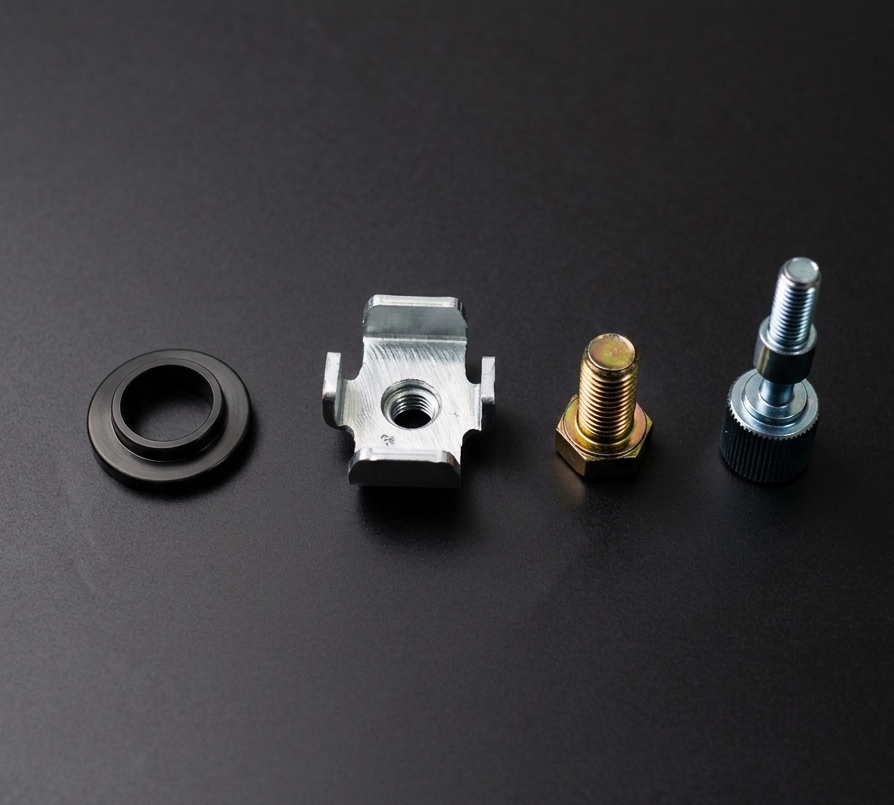
A practical guide to stopping rust on steel and metal parts in Singapore's hot, humid, coastal climate, comparing zinc plating, chromate, electroless nickel, black oxide and stainless passivation.
Few places test a metal part like Singapore. With temperatures hovering around 30 degrees Celsius all year, relative humidity that routinely climbs past 80 percent, frequent rain and a coastline that adds airborne salt to the mix, the local environment is close to a natural corrosion chamber. For procurement managers and engineers responsible for steel components, brackets, fasteners, housings and precision parts, the question is rarely whether rust will appear on untreated metal, but how quickly. The good news is that the right surface finish, specified correctly, can extend service life from days to years. This guide explains how corrosion actually works, why Singapore is such a demanding climate, and how the main protective finishes compare so you can choose the most cost-effective option for your parts.
Why metal parts rust in Singapore's climate
Rust is the everyday name for the corrosion of iron and steel. It is an electrochemical reaction: iron atoms give up electrons (oxidation) in the presence of oxygen and water, forming hydrated iron oxides that we see as the familiar red-brown bloom. Three ingredients are needed for this reaction to run: a metal that wants to oxidise, oxygen, and an electrolyte. In practice the electrolyte is simply moisture, and the more conductive that moisture is, the faster the reaction proceeds.
Singapore supplies these ingredients in abundance. High humidity means a thin film of moisture can condense on cool metal surfaces even without visible rain, and that film persists because the air rarely dries out. Coastal and marine influences introduce chloride ions from sea salt, which are particularly aggressive: chlorides break down protective films, increase the conductivity of the surface moisture, and drive localised attack such as pitting. Add industrial pollutants, washdown cycles in food and pharmaceutical plants, and condensation inside enclosures, and you have an environment where unprotected carbon steel can show surface rust within days of machining.
Temperature matters too. As a rule of thumb, reaction rates rise with temperature, so the consistently warm conditions speed up corrosion compared with a temperate climate. This is why a finish that performs adequately overseas may underperform locally, and why salt-spray expectations and coating thicknesses often need to be set more conservatively for parts that will live their lives in Singapore and the surrounding region.
Sacrificial versus barrier protection: the two core strategies
Almost every corrosion-control finish works in one of two ways, and understanding the difference is the key to specifying well.
Sacrificial (galvanic) protection
A sacrificial coating is made from a metal that is more reactive than steel, so it corrodes preferentially and protects the base metal even if the coating is scratched or chipped. Zinc is the classic example. When a zinc-plated part is damaged and steel is exposed, the surrounding zinc corrodes first and shields the steel galvanically over a small distance. This self-sacrificing behaviour is enormously valuable in the real world, where coatings get nicked during assembly and handling. The trade-off is that the zinc is gradually consumed, so coating thickness directly determines how long the protection lasts.
Barrier protection
A barrier coating protects simply by sealing the surface so that moisture and oxygen cannot reach the steel. Electroless nickel, many organic topcoats and dense oxide layers all work this way. Barrier coatings can be extremely effective and often look excellent, but they share a weakness: once the barrier is breached, corrosion can begin at the damage point and may even creep under the coating because the exposed steel is no longer protected. The best results often come from layering strategies that combine a sacrificial element with a barrier seal, for example zinc plating followed by a passivate and a sealer.
Zinc plating with chromate passivation
Zinc plating is the workhorse of cost-effective rust prevention for steel, and it is one of the most requested finishes for fasteners, brackets, enclosures, stampings and general engineering hardware. The process deposits a layer of zinc onto the part, providing sacrificial protection. On its own, however, bare zinc corrodes to form white powdery zinc oxide, so a chromate conversion coating, known as passivation, is applied on top to dramatically improve performance and add colour.
Modern chromate passivates are based on trivalent chromium chemistry, which has largely replaced the older hexavalent systems for health and environmental reasons. The passivate forms a thin conversion film over the zinc that slows the onset of white rust and provides a base for sealers and topcoats. The colour you choose is more than cosmetic; it generally signals the passivate type and broadly tracks with corrosion performance:
- Clear or blue passivate gives a bright, attractive finish with modest corrosion resistance, suited to indoor and sheltered parts.
- Yellow or iridescent passivate offers a thicker conversion layer and noticeably better salt-spray performance, a popular all-round choice.
- Black passivate delivers a decorative dark finish with good protection, often used where appearance matters.
Where extended salt-spray life is required, an additional sealer or topcoat can be applied over the passivate to push performance higher. To select the right combination for a part, our zinc plating service in Singapore and chromate conversion coating can be matched to the exposure and the standard you need to meet. Zinc plating is best suited to steel parts in mild to moderately corrosive conditions; for permanently wet, heavily chloride-laden or high-temperature service, a more robust system is usually warranted.
Electroless nickel: an even barrier for demanding parts
Electroless nickel plating deposits a nickel-phosphorus alloy without electrical current, using an autocatalytic chemical reaction. Its defining advantage is uniformity: because there is no current distribution to manage, the coating follows the contours of complex shapes, internal bores, threads and recesses with remarkably even thickness. That makes it a strong choice for precision parts where dimensional consistency and complete coverage are critical.
As a barrier coating, electroless nickel offers excellent corrosion resistance, and the protection generally improves with higher phosphorus content. High-phosphorus deposits are particularly valued in aggressive and acidic environments and are widely used in oil and gas, chemical processing, electronics and food-contact applications. The coating is also hard, especially after heat treatment, and contributes useful wear resistance, so it frequently solves corrosion and abrasion problems at the same time. Explore the options on our electroless nickel plating page, and see our in-depth electroless nickel plating guide for thickness and phosphorus selection. The main considerations are cost, which is higher than zinc, and the fact that, like any barrier, performance depends on the coating remaining intact.
Black oxide: economical, dimensionally neutral protection
Black oxide is a conversion coating that chemically transforms the surface of ferrous parts into a layer of magnetite, giving an attractive matte to satin black appearance. Unlike plating, it adds virtually no thickness, typically well under a micron, so it does not affect tight tolerances on press fits, threads or precision assemblies. This makes it popular for tooling, fasteners, gears, firearm components and machine parts where a non-reflective black finish and dimensional stability are wanted.
On its own, black oxide provides only mild corrosion resistance; its protective value comes largely from the oil, wax or supplementary sealer applied afterwards, which fills the porous oxide and repels moisture. With a good post-treatment it offers worthwhile protection for indoor and lightly handled parts at low cost. For wet or outdoor service, however, black oxide is generally not sufficient on its own and a plated system should be considered. Our black oxide finishing service is well suited to applications where appearance, low reflectivity and zero dimensional change are the priorities.
Passivation of stainless steel
It is a common misconception that stainless steel never rusts. Stainless resists corrosion because its chromium content forms a thin, self-healing passive oxide film. But machining, grinding, welding and even handling with carbon-steel tooling can embed free iron particles into the surface and disturb that film. In Singapore's humid air, those iron contaminants rust and can leave unsightly tea-staining or initiate pitting, undermining confidence in an otherwise corrosion-resistant part.
Chemical passivation addresses this by cleaning the surface and removing free iron, allowing a uniform, chromium-rich passive layer to reform and strengthen. The result is restored corrosion resistance without changing the appearance or dimensions of the part. Passivation is routinely specified for medical, semiconductor, food and precision components made from stainless steel. For the brightest, smoothest and most corrosion-resistant stainless surfaces, electropolishing goes a step further by removing a thin layer of metal to reduce surface roughness and embedded contamination. Learn more on our stainless steel passivation page and our electropolishing service, or read the dedicated electropolishing guide.
Comparing the main rust-prevention finishes
No single finish is best for every part. The right choice balances the corrosion environment, the base material, dimensional and appearance requirements, and budget. The table below summarises how the main options compare for steel and stainless components in a Singapore context. Treat the corrosion ratings as relative guidance; actual performance depends on thickness, sealers, part geometry and the agreed test standard.
| Finish | Protection type | Relative corrosion resistance | Relative cost | Typical appearance | Best for |
|---|---|---|---|---|---|
| Zinc plating, clear chromate | Sacrificial | Low to moderate | Low | Bright silver or blue | Indoor steel hardware and fasteners |
| Zinc plating, yellow or black chromate plus sealer | Sacrificial plus barrier | Moderate to high | Low to medium | Yellow iridescent or black | General outdoor and washdown steel parts |
| Electroless nickel | Barrier | High | Medium to high | Uniform satin grey | Complex precision parts and aggressive media |
| Black oxide with oil | Conversion plus sealer | Low | Very low | Matte to satin black | Tight-tolerance tooling and indoor parts |
| Stainless passivation | Restored passive film | High on stainless base | Low to medium | Unchanged, natural finish | Stainless medical, food and precision parts |
Salt-spray testing: setting realistic expectations
When buyers ask how long a finish will last, the conversation usually turns to salt-spray, or salt-fog, testing. The most widely cited method is ASTM B117, in which parts are exposed to a continuous fine mist of neutral salt solution in a controlled chamber and inspected for the onset of corrosion over time. Results are reported as the number of hours to first white rust (corrosion of the zinc layer) and to first red rust (corrosion of the underlying steel).
It is important to understand what salt-spray hours do and do not tell you. The test is an accelerated, comparative tool: it is excellent for verifying that a process is under control and for ranking finishes against each other, but the hours do not translate directly into years of real-world life. Performance in service depends on the actual environment, design details that trap or shed water, edges and threads where coatings thin, and mechanical damage. For that reason, the most useful approach is to agree a specific target and acceptance criteria up front: which test, how many hours to white and to red rust, and how the parts will be racked. A finisher can then engineer the zinc thickness, passivate type and sealer to meet it. Beware of comparing quoted hours from different sources without confirming they used the same test, the same failure definition and representative parts.
Applications and industries
Corrosion protection cuts across virtually every sector that handles metal parts in Singapore, and the optimal finish shifts with the demands of each field.
- Precision engineering and manufacturing rely on zinc plating, electroless nickel and black oxide to protect brackets, housings, jigs and fasteners. See our overview of surface treatment for precision engineering parts and the services available for general manufacturing.
- Semiconductor equipment demands clean, uniform and often barrier-type finishes; electroless nickel and high-purity stainless passivation are common choices for semiconductor applications.
- Medical devices frequently use passivated and electropolished stainless to ensure corrosion resistance and cleanability, as discussed in our work for the medical sector.
- Automotive components combine zinc systems and electroless nickel for under-bonnet and chassis parts exposed to moisture and road salts; see automotive finishing.
- Defence and marine-adjacent hardware calls for robust, layered protection and careful material selection for defence applications.
How to specify the right finish and what to send a finisher
Choosing a finish is a design decision as much as a purchasing one, and small details make a large difference to corrosion outcomes. Start from the service environment: is the part indoors and dry, exposed to washdown, or living outdoors near the coast? Match the protection strategy to that exposure, then consider the base material, any dimensional constraints, threaded or mating features that must be masked, electrical or wear requirements, and the appearance you want.
Design details also influence how well any finish performs. Sharp edges and corners tend to receive thinner coatings, so generous radii help. Crevices, blind holes and overlapping joints trap moisture and concentrate chlorides, so they should be avoided or sealed where possible. Dissimilar metals in contact can set up galvanic cells that accelerate corrosion, so plan material pairings carefully or isolate them.
When you approach a finisher, provide as much of the following as you can to get an accurate recommendation and quotation:
- Base material and condition, including any prior heat treatment or plating.
- Drawings with critical dimensions, tolerances and surface-finish callouts.
- The service environment and expected life.
- The required finish, colour and any cosmetic acceptance criteria.
- Salt-spray, thickness or hardness specifications, and the standard to be met.
- Features to mask, such as threads, bearing surfaces or electrical contacts.
- Quantities, batch sizes and delivery expectations.
The more context you supply, the better a finisher can balance protection against cost and avoid both under-protection and unnecessary over-specification.
Quality, inspection and process control
Reliable corrosion protection depends on consistent process control, not just the choice of finish. Thorough cleaning and surface preparation before plating are essential, because oils, scale and contamination prevent proper adhesion and create weak spots where corrosion starts. During and after processing, coating thickness should be verified, adhesion checked, and appearance inspected against the agreed criteria.
Beyond salt-spray testing, common checks include thickness measurement using magnetic or other gauges, adhesion testing, and visual inspection for coverage in recesses and on edges. For stainless passivation, tests can confirm that free iron has been removed and that a stable passive film is present. Establishing these checks and documenting results gives buyers traceability and confidence that each batch meets the same standard, which is particularly important for regulated industries and for parts destined for harsh service.
Conclusion: protect parts for the climate they live in
Rust is not inevitable, but in Singapore's hot, humid and salt-laden environment it is relentless when steel is left unprotected. The most cost-effective defence is to match the finish to the exposure: zinc plating with the right chromate and sealer for everyday steel hardware, electroless nickel where complex shapes or aggressive media demand a uniform barrier, black oxide where tight tolerances and a black appearance matter indoors, and passivation or electropolishing to keep stainless steel performing as it should. Understanding the difference between sacrificial and barrier protection, and setting realistic salt-spray targets, lets you specify with confidence rather than guesswork.
Frequently Asked Questions
Why do metal parts rust so quickly in Singapore?
Singapore sits a degree from the equator with year-round temperatures around 30 degrees Celsius and relative humidity often above 80 percent. Moisture is the electrolyte that drives corrosion, and coastal salinity plus industrial pollutants accelerate it. Unprotected carbon steel can show surface rust within days, so a protective finish is essential rather than optional.
What is the difference between sacrificial and barrier corrosion protection?
Sacrificial coatings such as zinc corrode preferentially to protect the steel beneath, so they keep working even if the layer is scratched. Barrier coatings such as electroless nickel simply seal the surface from moisture and oxygen, giving excellent protection until they are breached, after which corrosion can start at the damage point. Many parts benefit from combining both ideas.
How much salt-spray resistance can I expect from zinc plating with chromate?
Salt-spray hours depend on zinc thickness and the chromate type. Clear or blue trivalent chromate typically gives modest protection, yellow or iridescent passivates more, and a black or thick passivate with a topcoat or sealer can reach several hundred hours to white rust under ASTM B117. Always agree the test target and acceptance criteria with your finisher in advance.
Is stainless steel rust-proof, or does it still need treatment?
Stainless steel resists corrosion thanks to a chromium-rich passive film, but machining, welding and handling can leave embedded iron and free iron on the surface that rusts in humid air. Chemical passivation removes that contamination and restores a uniform passive layer, which is why critical stainless parts are passivated even though the base metal is corrosion-resistant.
Which finish is best for indoor versus outdoor or coastal parts?
For sheltered indoor parts, zinc with clear chromate or black oxide with oil is often enough. For damp, washdown or coastal exposure, choose thicker zinc with yellow or black passivate and a sealer, or electroless nickel for an even barrier. For the harshest marine settings, combine a corrosion-resistant base metal, a robust plated barrier and good design detailing.
What information should I send a finisher to get the right corrosion protection?
Provide the base material, part drawings with critical dimensions and tolerances, the service environment, the required finish and colour, any salt-spray or thickness specification, threaded or mating features to mask, and the standard you must meet. The more context you give, the better a finisher can recommend a process and avoid costly rework or under-protection.
Need Help Choosing the Right Surface Treatment?
Not sure which surface treatment your spare parts need?
Active Treatment Pte Ltd has more than 15 years of experience helping manufacturers, precision engineering firms, semiconductor companies, medical device suppliers and industrial businesses improve corrosion resistance, wear resistance and component lifespan.
Whether you require anodizing, electroless nickel plating, zinc plating, hard chrome plating, electropolishing or another industrial surface treatment, our Singapore engineering team can review your specifications and recommend the most suitable process.
Send your drawings, part specifications or project requirements for a technical consultation.
Email activetreatment88@yahoo.com.sg or phone +65 6352 9846.
Request Technical Consultation · Request Quotation · View Surface Treatment Services
Recommended Services
- Zinc Plating — Offers excellent corrosion resistance with a uniform zinc layer. Available in clear, yellow, and black chromate passivations to meet varied engineering and aesthetic requirements.
- Electroless Nickel Plating — Auto-catalytic nickel-phosphorus plating delivering perfectly uniform thickness on complex geometries, blind holes and threads — with medium- and high-phosphorus grades for hardness or 1,000+ hours of corrosion resistance.
- Chromating — RoHS-compliant clear and yellow chromate coatings applied over zinc or aluminium to significantly improve corrosion resistance and electrical conductivity.
- Black Oxide — Chemical conversion coating that imparts a uniform black finish on steel, improving corrosion resistance, reducing light reflection, and providing a premium aesthetic to precision components.